Common Signs Your Landscape Lighting Needs Repair
Landscape lighting needs repair when fixtures flicker, stay dark, dim, remain on during daylight, or show water or wiring damage. LandscaperSammamishwa.com checks the fixtures, controls, transformer, wiring, and lighting zones to locate the fault safely.
Written by Adam Gorski · 29 years of local experience
Request an Estimate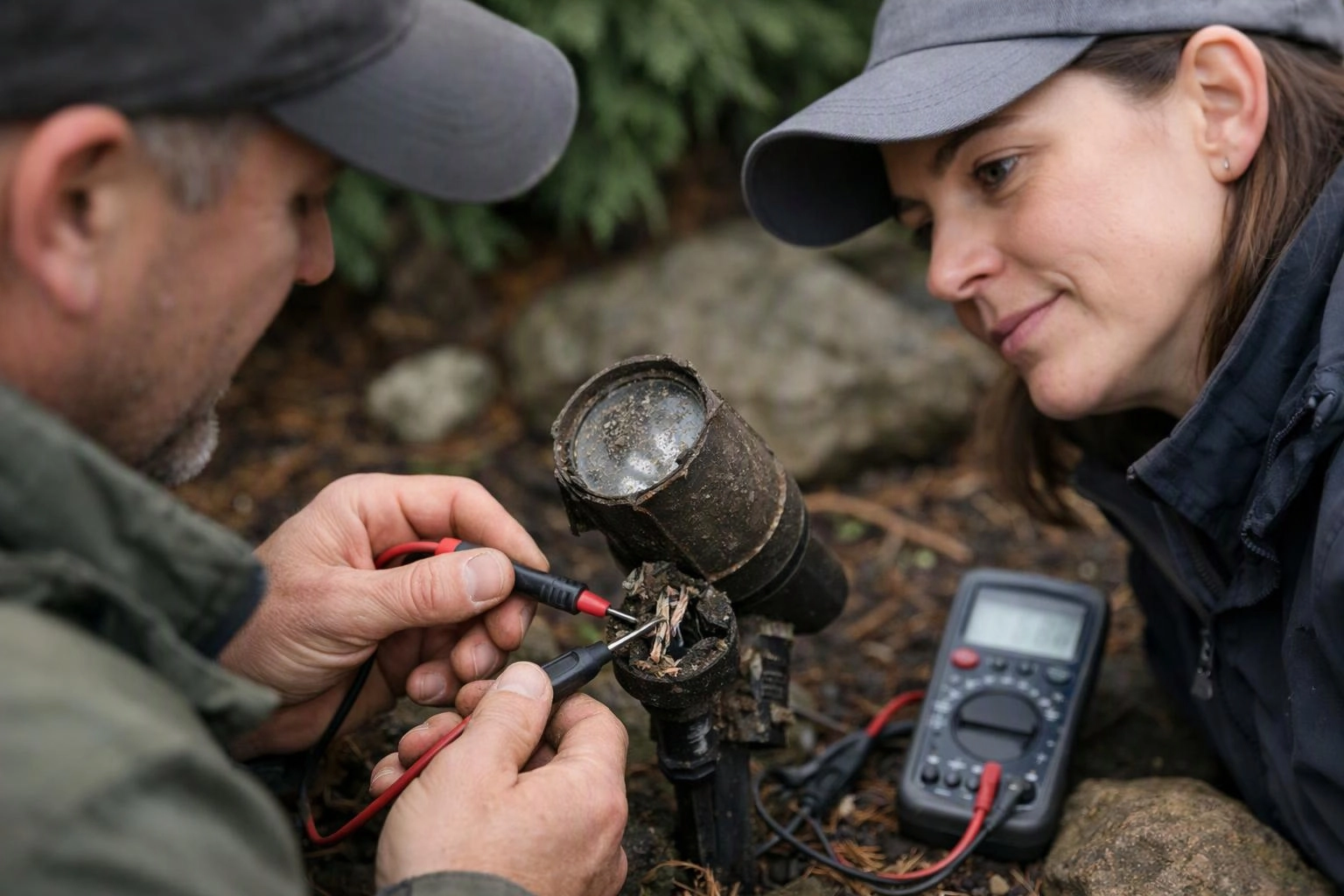
Our guidance comes from Adam Gorski, who explains how we isolate landscape lighting faults and protect the surrounding property.
What Are the Most Common Signs of Landscape Lighting Problems?
Landscape lighting problems often appear as dark fixtures, flickering bulbs, dim output, daytime operation, damaged housings, or one failed lighting zone.
These symptoms can overlap, so replacing one lamp may not solve the wider fault. Our team traces the system before choosing repair or replacement.
Why Won't Landscape Lights Turn On?
Landscape lights won't turn on when power, controls, wiring, or lamps have failed. We trace the system from the power source to the affected fixtures.
We check whether the transformer receives power and whether the circuit breaker or GFCI outlet has interrupted it. We also review the timer and photocell for settings or control faults.
A damaged low-voltage cable can stop power from reaching several fixtures. A failed lamp can leave one light dark while the rest of the system works.
If the outlet resets and the lights still stay dark, our team can inspect the wiring path and transformer safely. You can request Landscape Lighting Repair when the fault needs system testing.
Why Do Outdoor Lights Flicker or Dim?
Outdoor lights flicker or dim when connections, voltage, lamps, or the transformer cannot deliver steady power.
A loose connection can interrupt power as the fixture moves or the wire shifts. A corroded connection can add resistance and reduce the light's output.
Voltage drop can affect fixtures farther along a low-voltage wiring run. The transformer may also need testing if several lights flicker or dim together.
An LED lamp can fail gradually, so one fixture may look weak before it goes dark. We inspect the fixture, connection, and transformer to separate a lamp fault from a system fault.
Why Is One Landscape Lighting Zone Not Working?
One landscape lighting zone can stop working when its branch wiring, connections, fixtures, or control path has a fault.
A junction connection can loosen or corrode and interrupt power to the branch. Buried low-voltage cable can also become damaged during planting, digging, or ground movement.
If every fixture in one lighting zone is dark, the fault may sit before the first fixture. If only one light is dark, the fixture or its local connection deserves closer inspection.
Our team follows the branch from the transformer and controls to the affected fixtures. That approach helps us repair damaged wiring or replace a failed fixture when needed.
What Should You Check Before Requesting Landscape Lighting Repair?
You can safely check the timer, controls, outlet reset, breaker, and visible fixture damage before requesting repair.
Keep the system off if you see exposed wiring or standing water near electrical parts. Do not open the transformer or disturb buried cable during a basic check.
When Should You Stop Troubleshooting Landscape Lights?
Stop troubleshooting when landscape lighting has exposed wiring, burn marks, water damage, or repeated breaker trips. We inspect the system and handle repair work safely.
Burn marks can point to overheating or a failed component. Repeated breaker trips can indicate a deeper electrical fault that needs proper testing.
Buried wiring is difficult to assess without disturbing soil and nearby landscaping. Work that involves the electrical supply, code requirements, or licensed electrical work should be handled by the appropriate licensed professional.
Electrical safety matters even with low-voltage lighting because the transformer connects to the property power supply. Our team can isolate the affected fixture, zone, wiring path, or transformer.
DIY Checks or Landscape Lighting Repair: Which Option Fits?
DIY checks fit simple control issues, while landscape lighting repair fits damaged wiring, fixture faults, and transformer testing.
| Factor | What you can do yourself | What we do |
|---|---|---|
| Timer or photocell | Review the schedule and look for visible blockage or damage. | Test lighting controls and confirm their connection to the system. |
| GFCI outlet or circuit breaker | Check for a tripped switch or outlet reset. | Trace the fault when the protection device trips again. |
| Fixture replacement | Observe visible damage without opening electrical parts. | Test the fixture and replace a failed component when appropriate. |
| Low-voltage wiring | Note exposed or disturbed areas from a safe distance. | Trace branch wiring and junction connections without guessing at the fault. |
| Transformer testing | Check for obvious power interruption without opening the unit. | Test transformer output and compare it with the affected lighting zones. |
Electrical safety should guide the choice. Stop when the problem involves exposed wiring, buried cable, water damage, or repeated breaker trips.
How We Diagnose Landscape Lighting Problems
We diagnose landscape lighting problems by tracing power, testing controls, checking wiring and connections, and isolating failed fixtures or zones.
Our landscape lighting inspection starts with the transformer and control path. We then check low-voltage wiring, fixture connections, and each affected lighting zone.
We look for corrosion, water intrusion, damaged housings, loose connections, and voltage drop. The findings show whether the system needs a lamp, fixture, wiring, control, or transformer repair.
We explain the fault and the work required before preparing a repair estimate. The estimate reflects the parts, access, and repair steps the system needs.
What Can Change the Cost of Landscape Lighting Repair?
Landscape lighting repair cost changes with the fault location, fixture condition, wiring access, transformer condition, and parts needed.
Corrosion can make connections harder to restore and may affect nearby fixture parts. Water-damaged fixtures may need replacement when the housing or internal components cannot be protected.
The number of affected zones also changes the work because each branch needs testing. Difficult wiring access can add care and labor to the repair process.
We review the system and provide a quote based on the work required. Our quote explains the repair scope, replacement parts, and any wiring or transformer work we identify.
Questions About Landscape Lighting Repairs
Why do landscape lights stay on during the day?
Landscape lights stay on during the day when the photocell, timer, or control setting fails to switch them off. Dirt, blockage, wiring faults, and damaged controls can also affect daytime operation.
Can I replace a landscape light myself?
Yes, you can replace a landscape light when the work involves a simple, accessible low-voltage fixture and no damaged wiring. Stop and contact our team when the fixture has water damage, exposed wire, corrosion, or an unclear connection.
Can rain cause landscape lighting to stop working?
Yes, rain can cause landscape lighting to stop working when water enters a fixture, connector, junction, or damaged cable. Our team checks for water intrusion, corrosion, and failed connections before choosing a repair.
What does repeated landscape lighting breaker tripping mean?
Repeated landscape lighting breaker tripping means the system may have a power fault, damaged component, short, or water-related problem. Leave the circuit off and have the wiring and transformer checked safely.
When landscape lighting problems continue, our team can inspect the system and explain the repair options.
Request a landscape lighting repair quote