Signs Your Pond May Need Cleaning or Repair
A pond may need cleaning when water turns cloudy or green, odors develop, or debris builds up. Pond leaks, damaged liners, weak circulation, and failed features can point to repairs; LandscaperSammamishwa.com can assess the cause and recommend the right work.
Written by Adam Gorski · 29 years of local experience
Request an Estimate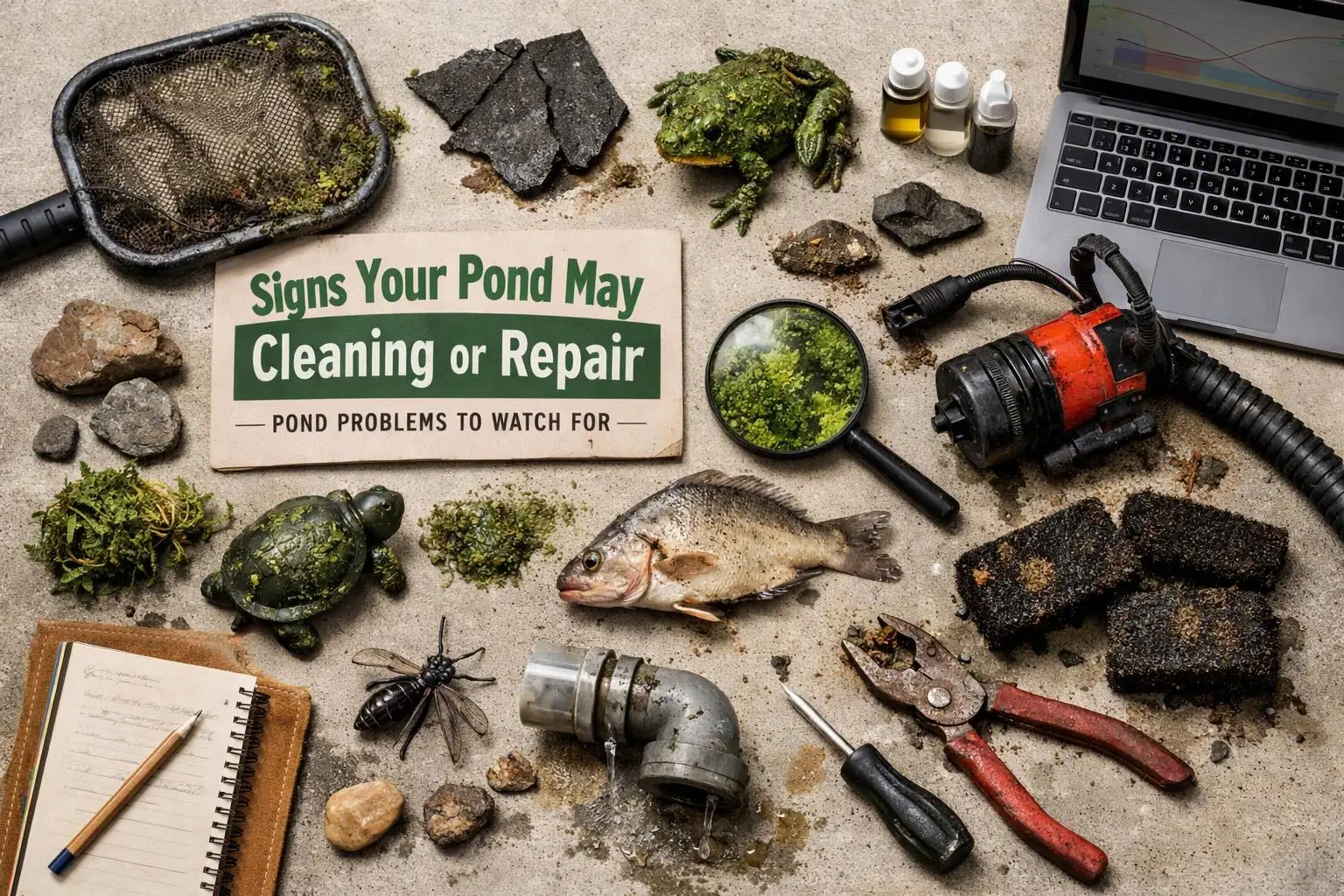
What Signs Show That a Pond Needs Cleaning or Repair?
A pond needs attention when water quality, circulation, structure, or equipment changes noticeably. Some signs point to pond cleaning, while others suggest pond repair.
Why Is Pond Water Cloudy or Green?
Cloudy or green pond water usually shows that algae, sediment, organic debris, or weak filtration is affecting water quality.
Surface debris can break down and add organic matter to the water. Sediment can also collect in the basin and make water look dull or brown.
Algae may grow when water circulation and filtration cannot keep up with the pond’s conditions. Our team checks the water, filter, skimmer, and debris load before recommending pond cleaning.
Our Pond Cleaning service can address buildup that simple surface care cannot remove.
Why Does a Pond Smell Bad?
A bad pond smell often comes from decaying organic matter, stagnant water, or sludge collecting on the pond bottom.
Leaves, plant material, and other debris can settle below the surface. As that material breaks down, it can create odor and reduce water quality.
Low oxygen and weak water circulation can make the problem worse. Our crew checks the pond bottom, water movement, and equipment to separate cleaning needs from repair needs.
What Do Pump and Water Feature Problems Look Like?
A pump or water feature may need attention when water flow drops, unusual noise starts, or the feature stops working.
Our team checks the pump, filter, skimmer, and circulation path. Electrical pump work should be handled by our crew or another licensed professional, especially near standing water.
How Can You Tell if a Pond Needs Repair?
A pond may need repair when water levels fall without a clear cause, the liner shifts, or the basin and edging show damage.
A pond leak can develop from liner damage, a loose connection, or a problem near the pond edge. Leak detection helps narrow the repair area before work begins.
Cracks in the pond basin can allow water to escape and may grow when the ground settles. Settling can also shift pond edging and place stress on the liner.
Our team assesses the water level, pond liner, pond basin, and edging before recommending Pond Repair.
What Should You Check Before Requesting Pond Work?
A basic pond inspection can help you describe the problem and show whether cleaning or repair may be needed.
Don't reach into moving equipment or handle electrical parts near water. Share your observations with our team so we can complete a safer pond assessment.
DIY Pond Care or Professional Pond Cleaning and Repair?
You can handle basic observation and light surface care, while our team assesses deeper buildup, leaks, pumps, liners, and damaged features.
Simple observations can help identify a concern, but deeper pond maintenance may involve hidden damage or unsafe equipment. Our crew connects each symptom to the right pond service.
| Factor | What you can do yourself | What we do |
|---|---|---|
| Surface care | Observe water clarity and remove reachable surface debris safely. | Assess buildup, algae, sediment, and organic debris. |
| Pump inspection | Note pump noise and changes in water flow. | Inspect circulation, pump condition, filter blockage, and related equipment. |
| Liner repair | Look for visible liner damage and changes in water level. | Trace likely leak areas and assess liner repair needs. |
| Water feature repair | Observe a waterfall or fountain from a safe distance. | Assess water feature components and recommend safe repairs. |
| Safety | Avoid electrical equipment, unstable edging, and unsafe access. | Complete work that requires equipment access or technical assessment. |
How We Assess Pond Cleaning and Repair Needs
We assess the water, debris, circulation, equipment, liner, and basin before recommending cleaning or repair work.
Our team starts with water quality, visible debris, algae, and pond sludge. We then check the pump, filter, skimmer, and water feature for circulation problems.
We inspect the pond liner, basin, edging, and visible leak signs. These findings help us define the work scope and prepare a clear quote.
Our assessment separates pond cleaning from pond repair when both problems appear together. We explain what needs attention and why.
When Should You Request a Pond Cleaning or Repair Quote?
Request a pond cleaning or repair quote when problems keep returning, affect circulation, create odors, or suggest a leak or structural issue.
Quote details can change with the pond condition, debris load, algae growth, leak severity, pump condition, and repair scope. Share photos and describe recent changes so our team can prepare the right assessment.
We can review whether the pond needs cleaning, pond restoration, pump work, liner repair, or another water feature service. Our quote reflects the work identified during the pond assessment.
Questions About Pond Cleaning and Repair Signs
Can a pond leak cause the water level to keep dropping?
Yes, a pond leak can cause the water level to keep dropping when water escapes through the liner, basin, edging, or a connection. Our team uses the observed water level and leak location to guide the pond repair assessment.
Should fish stay in a pond during cleaning?
Fish should stay in the pond only when the cleaning plan keeps their conditions safe. Our team reviews the pond, water quality, debris, and cleaning scope before deciding how the work should be handled.
Can pond algae damage a pond or its equipment?
Yes, pond algae can add organic matter and contribute to filter blockage or reduced water flow. Our team checks algae growth, filtration, circulation, and equipment condition before recommending pond cleaning or repair.
What information should I provide when requesting a pond cleaning or repair quote?
Provide photos, recent water-level changes, pump symptoms, filter condition, algae growth, debris buildup, odors, and the suspected leak location. These details help our team understand the pond condition and define the repair scope.
Author: Adam Gorski
Request a pond assessment when cleaning or repair signs continue.
Get a Free Estimate