
What Is a Rain Garden?
Rain Garden is a planted depression that collects stormwater from roofs, driveways, or other hard surfaces. The soil and plant roots slow the water and help it soak into the ground. A rain garden supports yard drainage by managing runoff near its source, without holding water like a pond.
Quick Facts About Rain Garden
Category
Stormwater landscape feature
Used for
Managing surface runoff
Common confusion
It is not a permanent pond
Also called
Bioretention Garden
Often discussed with
Yard Drainage
Key Takeaways About Rain Garden
- It is a planted basin, not a pond.
- Good soil drainage helps the garden work.
- A rain garden is not the same as a swale.
How Rain Garden Works
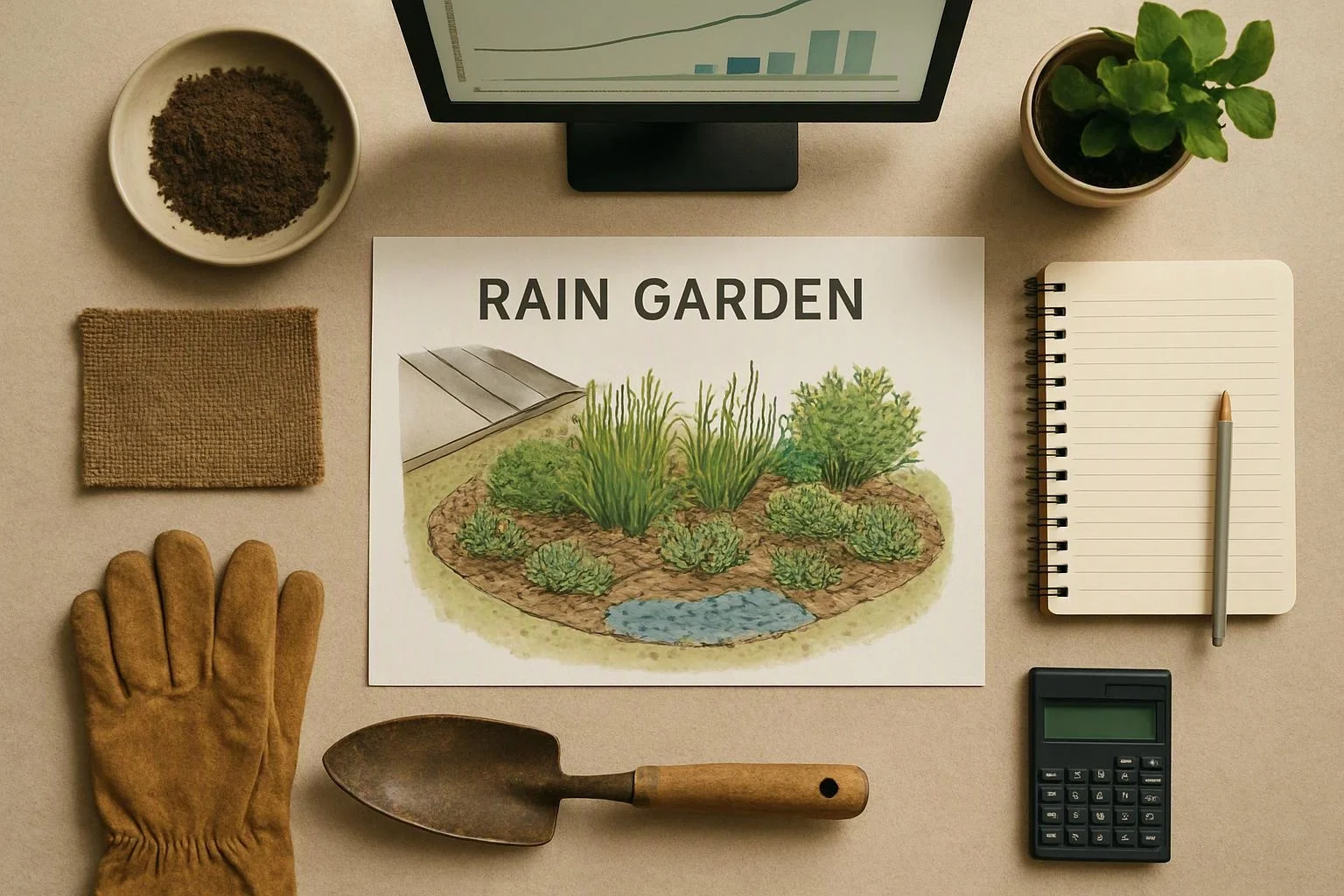
A Rain Garden receives runoff through a shallow surface path, pipe, or drain outlet. A level basin spreads the flow across planted soil. Mulch and roots slow the water, while open soil lets some moisture move downward.
Related glossary terms: Swale, Underdrain, Soil Amendment.
Designers check the water source, slope, soil texture, and nearby structures before placing the garden. Plants must handle both wet periods and dry spells. A swale moves water along a shallow channel, while a rain garden mainly holds runoff briefly so the ground can absorb it.
Overflow planning gives extra water a safe route during heavy rain. Some sites also need an underdrain when the native soil drains too slowly. The finished feature should keep water away from foundations, walkways, and other areas that need to stay dry.
Expert Note
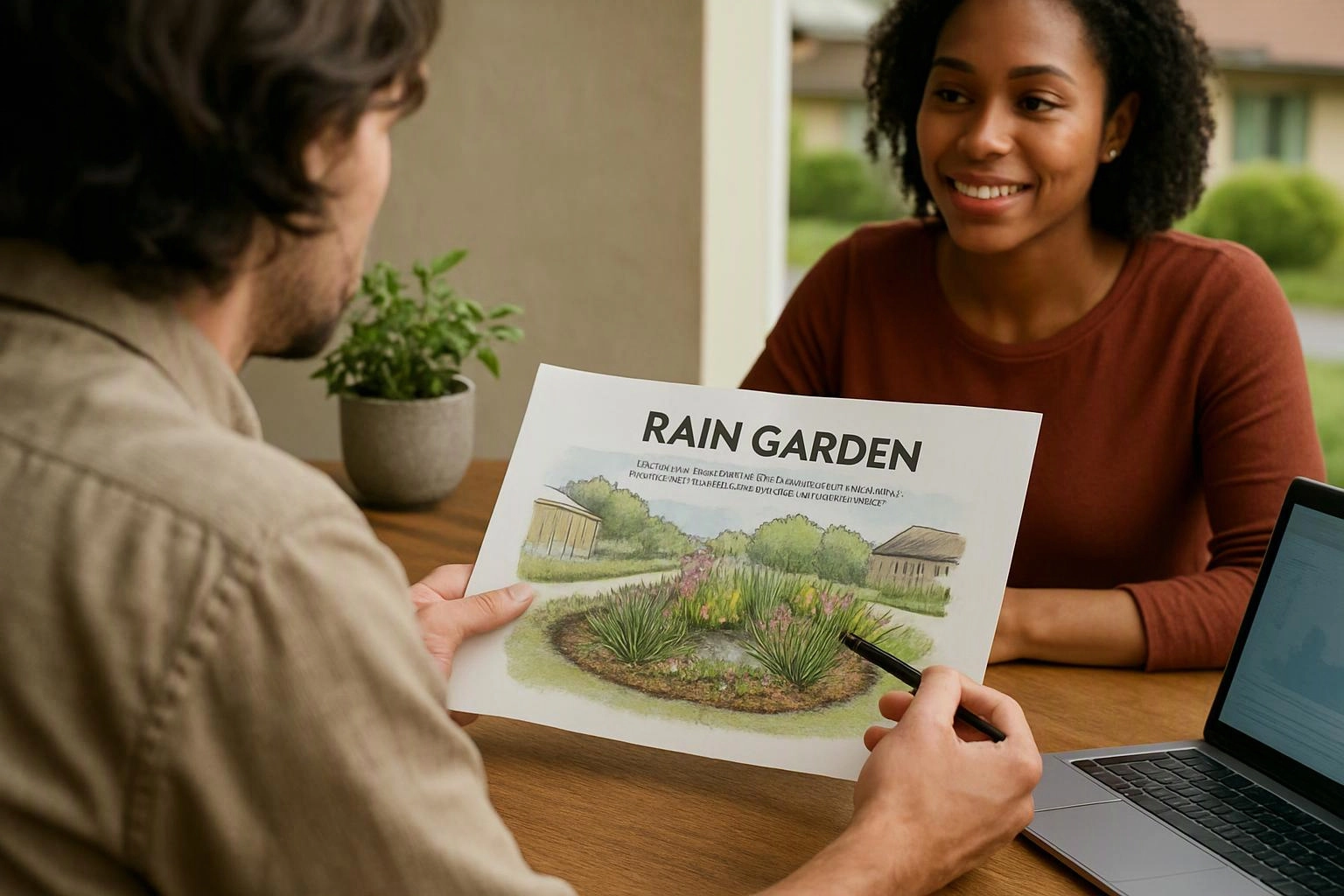
When we plan a rain garden, we trace where runoff starts and where it currently flows. We check the slope, soil, nearby structures, and overflow route before selecting plants. Our team also looks for standing water that could point to a wider drainage problem.
Rain Garden in Practice: A Real-World Example
A North Bend home may have roof runoff flowing toward a low part of the yard. A rain garden can receive that flow, spread it through planted soil, and guide overflow away from the house.
Related Services
Related Terms
Swale
A swale is a shallow, sloped channel that guides and slows surface water across a landscape…
Underdrain
An underdrain is a buried drainage pipe that collects water from soil and carries it to…
Soil Amendment
Soil Amendment is material added to existing soil to change its physical condition or nutrient balance…
Erosion Control Blanket
An Erosion Control Blanket is a ground-covering material placed over exposed soil to slow water flow…
LandscaperSammamishwa.com
Have Questions About Rain Garden?
Contact LandscaperSammamishwa.com for practical guidance on Rain Garden and related landscape architect company work in North Bend.