
What Is a Swale?
A swale is a shallow, sloped channel that guides and slows surface water across a landscape. It may use grass, soil, stone, or plants to hold water briefly and direct it toward a safe outlet. Swales support yard drainage by spreading runoff, reducing ponding, and limiting soil erosion on sloped ground.
Quick Facts About Swale
Category
Surface drainage feature
Used for
Guiding and slowing runoff
Common confusion
Often confused with a French drain
Also called
Drainage Swale, bioswale
Often discussed with
Yard Drainage, Grading Services
Key Takeaways About Swale
- A swale is broad and shallow, not a deep trench.
- Its slope guides runoff toward a planned outlet.
- A swale is not the same as a French drain.
How Swale Works
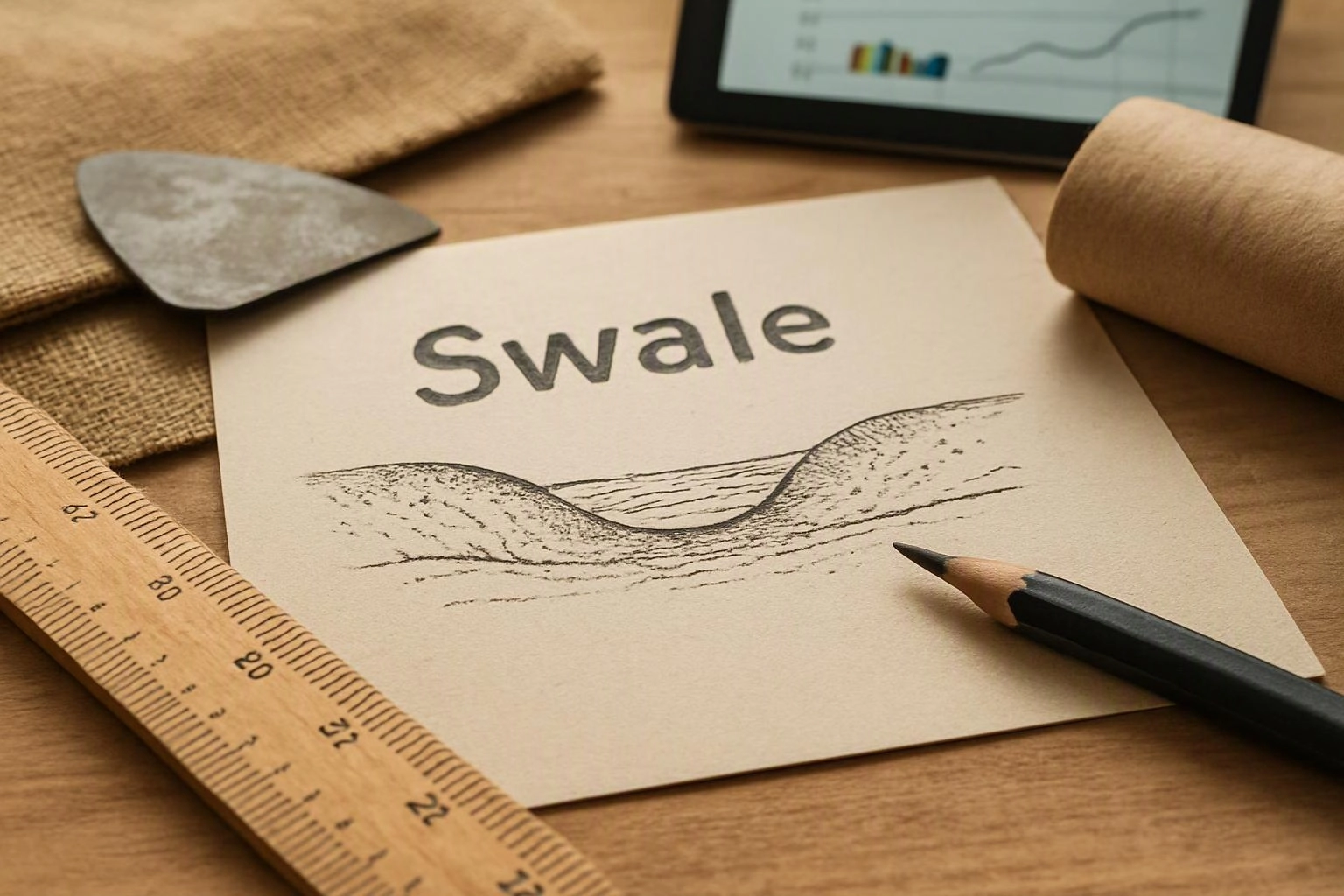
A swale moves water across the surface through a shallow channel. The channel has a gentle shape that spreads flow and slows its speed. Water can soak into the soil, collect briefly, or continue toward an outlet.
Related glossary terms: Berm, Rain Garden, Slope Stabilization.
Swale design follows the land's slope and the path of runoff. Grass, mulch, stone, or suitable plants can protect the channel from washing away. A berm may sit along one side to help guide water. A rain garden may receive water at the swale's lower end.
Swales work best when the channel stays open and the outlet remains clear. They handle surface water, while buried drains carry water below the ground.
Expert Note
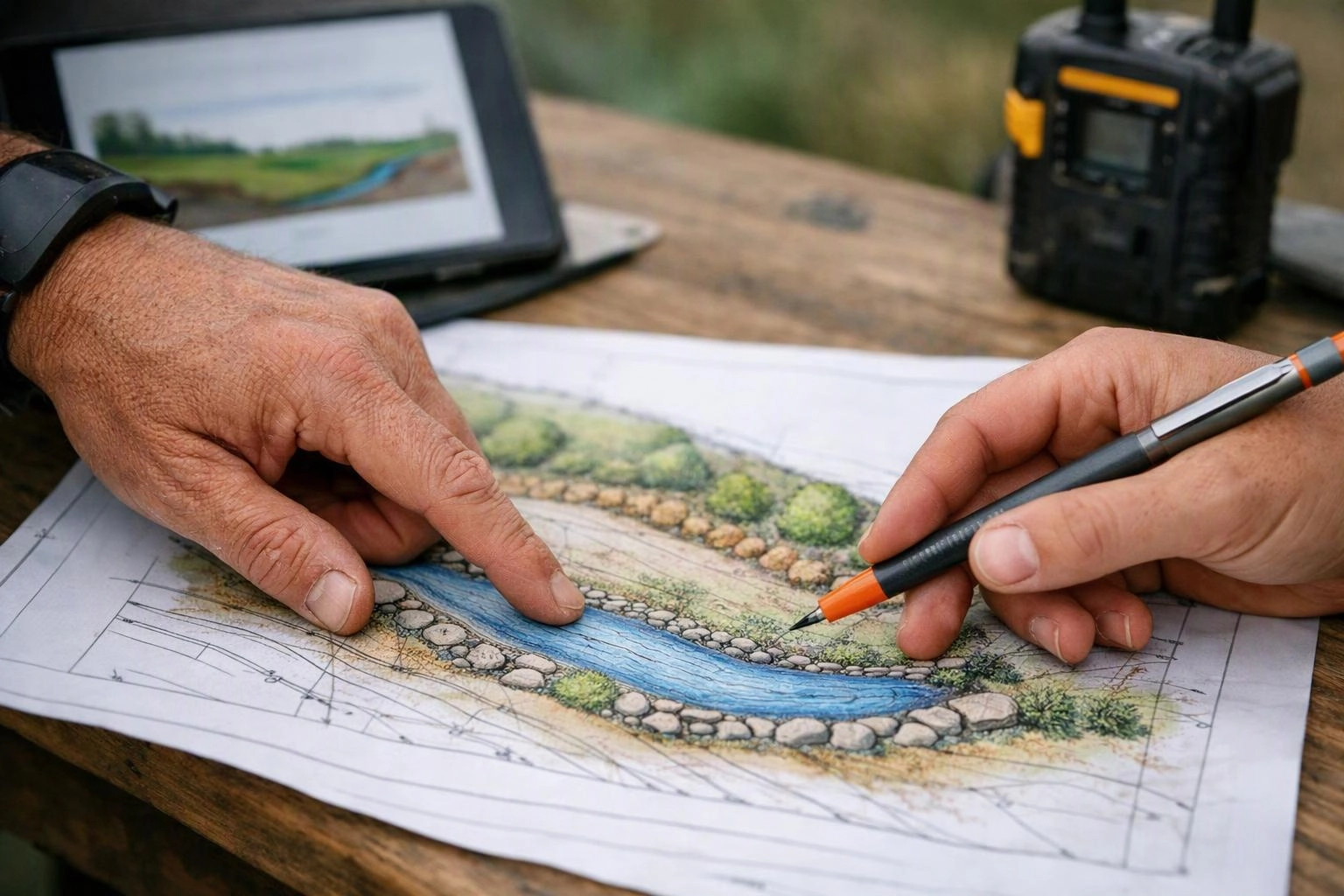
When we plan a swale, we study where water starts, how the ground slopes, and where runoff can safely end. We shape the channel to prevent standing water near structures, then check the outlet and surface protection after grading. Plant growth and seasonal rain can change how the swale performs.
Swale in Practice: A Real-World Example
On a sloped North Bend yard, runoff from an upper lawn may flow toward a patio. A shallow swale can guide that water along the side of the yard and release it into a suitable landscaped area.
Related Services
Related Terms
Berm
A berm is a raised bank of soil shaped into a long, sloping mound. Landscape grading…
Rain Garden
Rain Garden is a planted depression that collects stormwater from roofs, driveways, or other hard surfaces…
Slope Stabilization
Slope Stabilization is the process of keeping sloped soil and rock in place so the ground…
Underdrain
An underdrain is a buried drainage pipe that collects water from soil and carries it to…
LandscaperSammamishwa.com
Have Questions About Swale?
Contact LandscaperSammamishwa.com for practical guidance on Swale and related landscape architect company work in North Bend.