
What Is Slope Stabilization?
Slope Stabilization is the process of keeping sloped soil and rock in place so the ground resists sliding, washing, or settling. It combines grading, drainage, plants, soil reinforcement, or retaining structures when needed. The right approach depends on slope angle, soil condition, water movement, nearby features, and the planned landscape use.
Quick Facts About Slope Stabilization
Category
Grading and erosion control
Used for
Sloped soil and unstable ground
Common confusion
Surface erosion is not always deep slope failure
Also called
Slope Reinforcement, Slope Control
Often discussed with
Grading Services, Yard Drainage
Key Takeaways About Slope Stabilization
- Slope stabilization addresses ground movement, not just surface erosion.
- Drainage often plays a central role in keeping slopes stable.
- Groundcover alone may not solve deep soil movement.
How Slope Stabilization Works
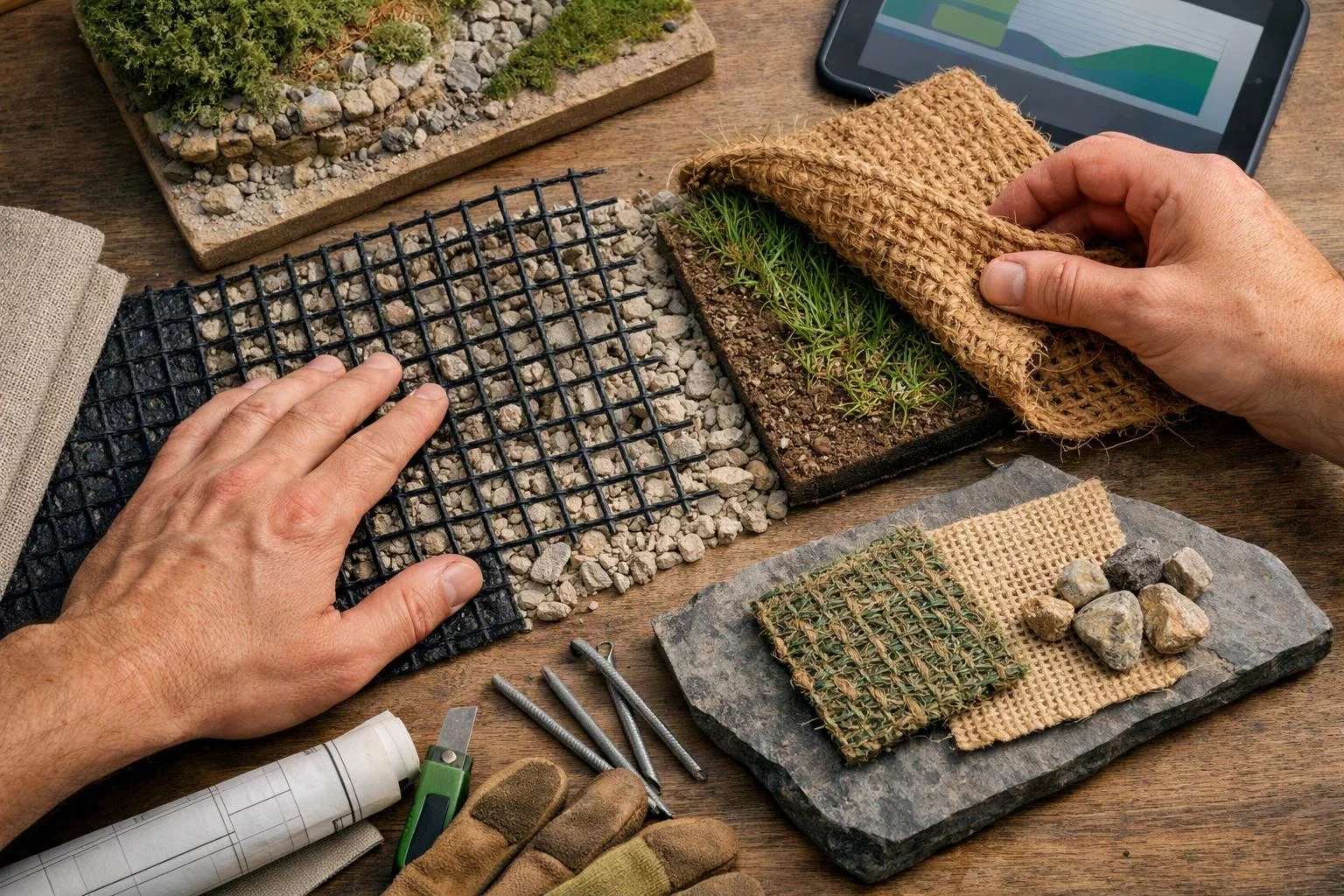
Slope Stabilization works by reducing the forces that move soil downhill. Grading can soften a steep area, while drainage directs water away from weak soil. Plants help hold the surface, and added soil support can strengthen deeper layers.
Related glossary terms: Erosion Control Blanket, Riprap, Swale.
The design starts with the slope shape, soil type, water paths, and nearby structures. A plan may combine a swale, underdrain, erosion control blanket, native planting, or retaining feature. Each part has a specific job, so surface planting cannot replace drainage when water pressure drives movement.
How it is used in grading
- Shape the slope so water moves in a controlled path.
- Protect exposed soil while plants become established.
- Keep runoff from collecting behind or below the slope.
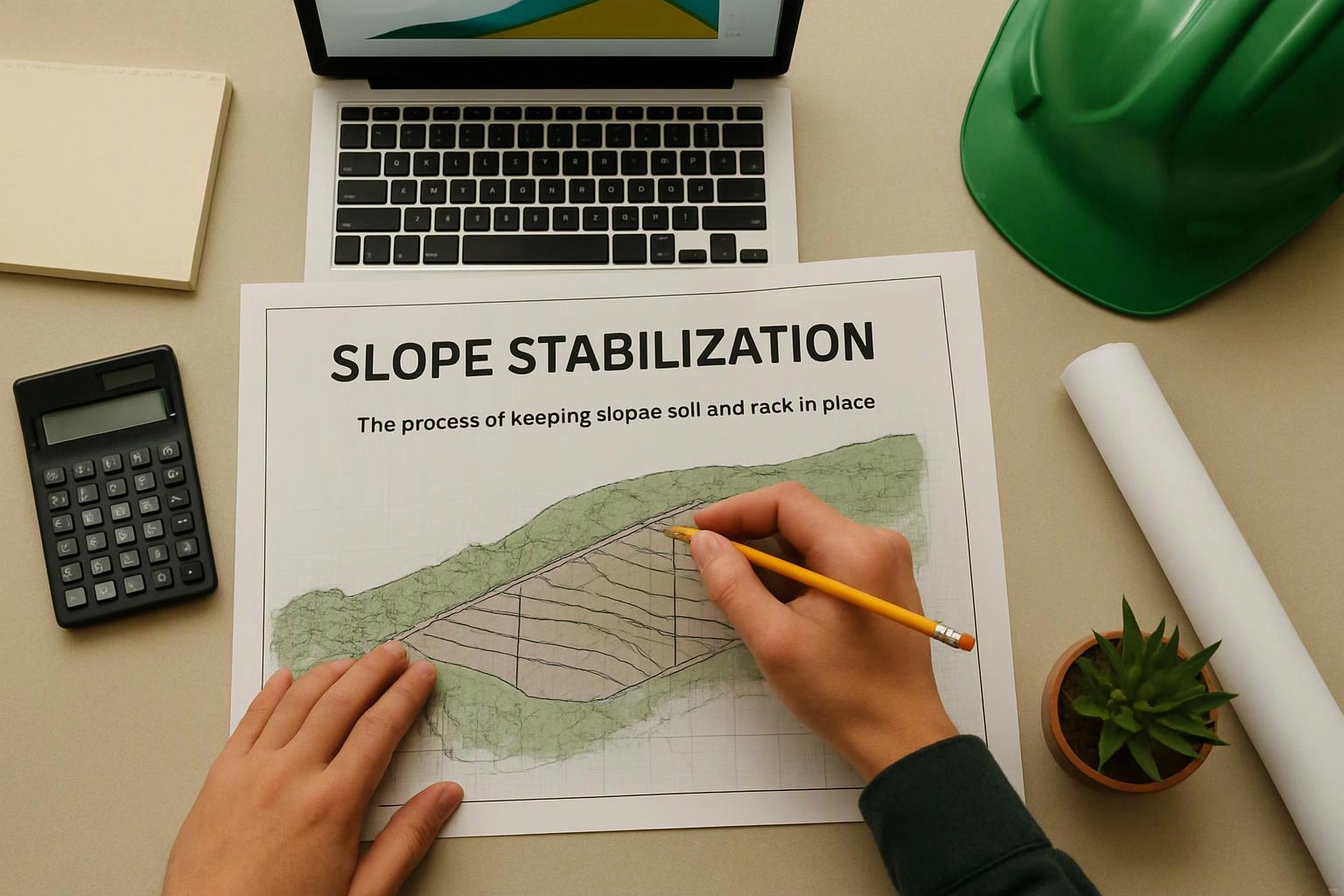
Expert Note
When we review slope conditions, we trace where water enters, collects, and leaves the site. We also check soil exposure, surface flow, and nearby hardscape before selecting grading or drainage work. Our grading approach keeps the finished slope practical for planting, maintenance, and safe movement around the landscape.
Slope Stabilization in Practice: A Real-World Example
A North Bend yard has a sloped area where stormwater flows toward a planting bed and washes soil downhill. Grading Services can reshape the flow path, add surface protection, and place suitable plants to help the soil stay in place.
Related Services
Related Terms
Erosion Control Blanket
An Erosion Control Blanket is a ground-covering material placed over exposed soil to slow water flow…
Riprap
Riprap is a layer of loose rock placed on soil or slopes to slow moving water…
Swale
A swale is a shallow, sloped channel that guides and slows surface water across a landscape…
Underdrain
An underdrain is a buried drainage pipe that collects water from soil and carries it to…
LandscaperSammamishwa.com
Have Questions About Slope Stabilization?
Contact LandscaperSammamishwa.com for practical guidance on Slope Stabilization and related landscape architect company work in North Bend.