
What Is Riprap?
Riprap is a layer of loose rock placed on soil or slopes to slow moving water and limit erosion. The rock absorbs water’s force and protects exposed ground. Riprap may line drainage channels, outlet areas, stream edges, or steep banks. A stable installation also needs a firm base and proper rock placement.
Quick Facts About Riprap
Category
Erosion control material
Used for
Water flow protection
Common confusion
Decorative rock
Also called
Rock Armor, Rock riprap
Often discussed with
Yard Drainage
Key Takeaways About Riprap
- Riprap uses loose rock, not poured concrete.
- Rock size and placement affect drainage performance.
- Riprap is not the same as decorative landscape rock.
How Riprap Works
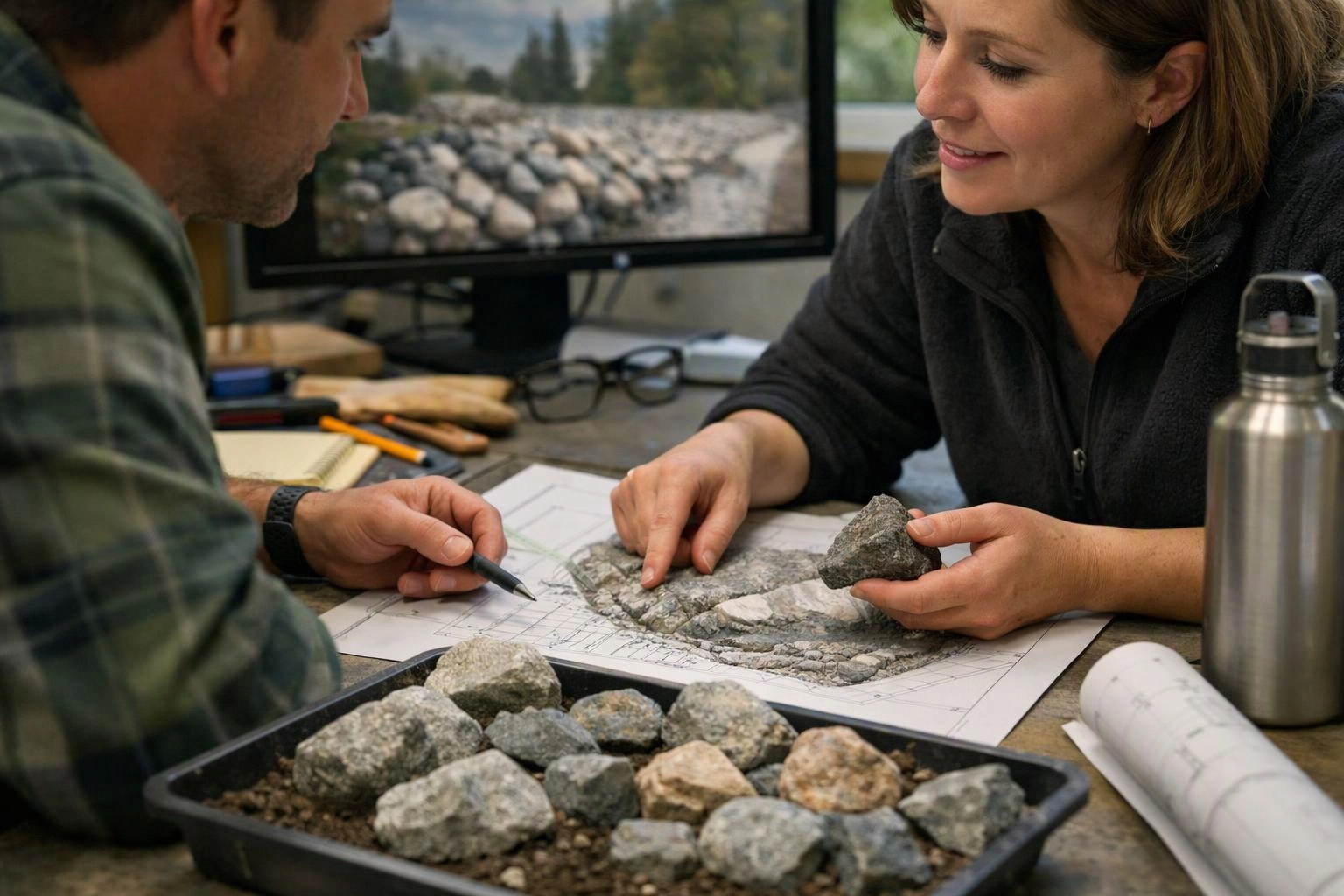
Riprap works by placing loose rock where flowing water can wash away soil. The rough surface breaks up water flow and reduces its speed. Rock weight also helps hold the layer in place.
Related glossary terms: Erosion Control Blanket, Geotextile Fabric, Slope Stabilization.
Installers choose rock size and layer depth based on the water path, slope, and soil condition. A base of geotextile fabric may separate the rock from soil and reduce soil loss below the surface. Riprap can protect a drainage outlet, swale, ditch, or slope.
Riprap needs a clear flow path and solid support. Loose placement on soft or shifting soil may allow rocks to sink or move. A swale may guide water toward the protected area before it reaches the riprap.
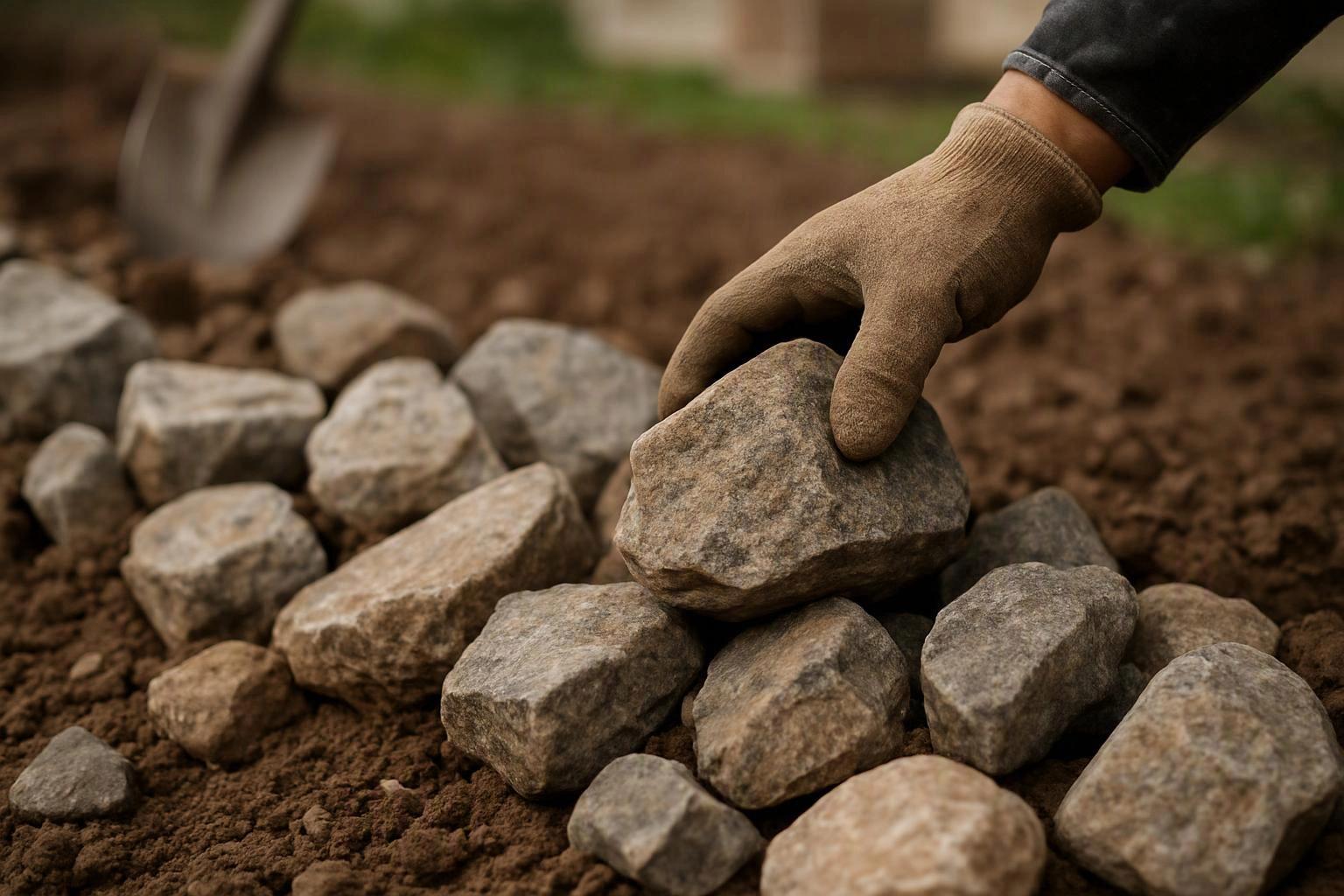
Expert Note
When we plan riprap for Yard Drainage, we trace where water enters, flows, and leaves the site. We check the soil, slope, outlet, and surrounding grade before placing rock. Our team also looks for signs of scour, settlement, or blocked flow after installation.
Riprap in Practice: A Real-World Example
A North Bend yard may need riprap at the end of a drainage outlet where runoff reaches exposed soil. The rock slows the discharge and helps keep the outlet from washing into the surrounding yard.
Related Services
Related Terms
Erosion Control Blanket
An Erosion Control Blanket is a ground-covering material placed over exposed soil to slow water flow…
Geotextile Fabric
Geotextile Fabric is a synthetic textile used in soil and drainage work. The fabric separates soil…
Slope Stabilization
Slope Stabilization is the process of keeping sloped soil and rock in place so the ground…
Swale
A swale is a shallow, sloped channel that guides and slows surface water across a landscape…
LandscaperSammamishwa.com
Have Questions About Riprap?
Contact LandscaperSammamishwa.com for practical guidance on Riprap and related landscape architect company work in North Bend.