
What Is Turf?
Turf is a ground covering made from living grass, synthetic grass, or both in related landscape use. Natural turf grows from soil and needs water, nutrients, mowing, and care. Artificial turf uses a manufactured surface that resembles grass and stays in place over a prepared base. For more detail, see Artificial Turf or Rock Landscaping: Which Installation Fits Your Project?.
Quick Facts About Turf
Category
Landscape ground covering
Used for
Lawn and play areas
Common confusion
Turf may be natural or artificial
Also called
Lawn Turf, Artificial grass
Often discussed with
Artificial Turf Installation
Key Takeaways About Turf
- Turf may be natural grass or synthetic grass.
- Artificial turf depends on a stable, well-drained base.
- Turf does not always mean living plants.
How Turf Works
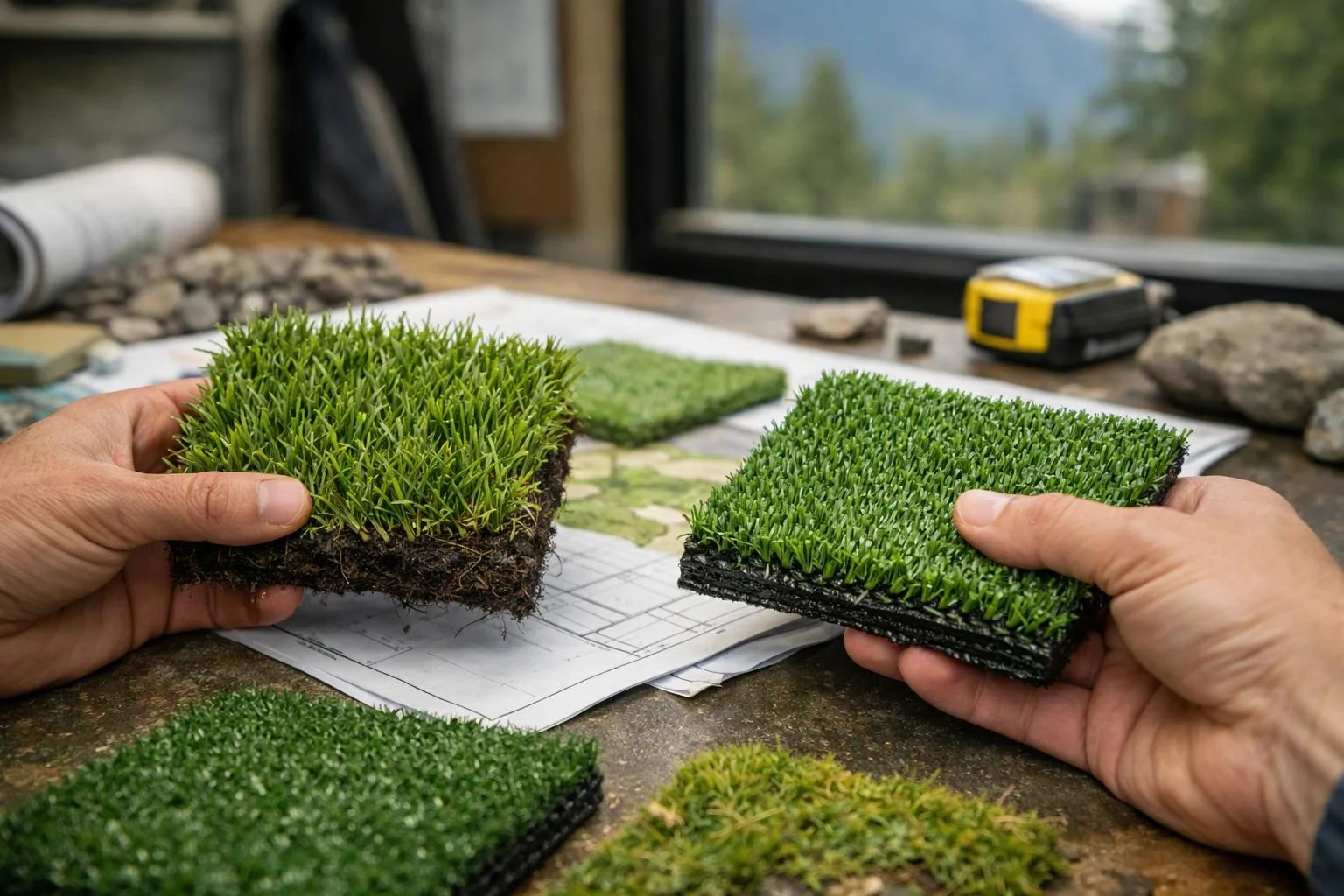
Turf covers prepared ground with a grass-like surface. Natural turf grows roots into soil, while artificial turf rests on a compacted base. The base supports the surface and helps water move away from it.
Related glossary terms: Gravel Base, Edging, Soil Compaction.
Artificial turf installation usually includes clearing the area, shaping the ground, and placing a stable aggregate base. Installers secure the turf at its edges and join sections carefully. Drainage details matter because trapped water can soften the base or create uneven spots.
Gravel base and edging support the finished surface. The right setup depends on soil, slope, drainage, and how people will use the area.
Expert Note
When we plan artificial turf, we inspect the existing ground and check how water moves through the area. We prepare the base for a firm, even surface, then secure edges and inspect seams. Our team also checks transitions where turf meets paths, planting beds, or other hardscape.
Turf in Practice: A Real-World Example
A homeowner may replace a muddy side yard with artificial turf. The installation can include removing unstable soil, preparing a drainage-friendly base, and securing the turf beside a walkway.
Related Services
Related Terms
Gravel Base
Gravel Base is a compacted layer of crushed stone placed beneath pavers or other hard surfaces…
Edging
Edging is a border or cut line that separates garden beds from lawns, paths, or other…
Soil Compaction
Soil Compaction is the process of pressing soil particles closer together, which reduces open space between…
LandscaperSammamishwa.com
Have Questions About Turf?
Contact LandscaperSammamishwa.com for practical guidance on Turf and related landscape architect company work in North Bend.