
What Is Edging?
Edging is a border or cut line that separates garden beds from lawns, paths, or other surfaces. It creates a clear boundary and helps keep soil, mulch, gravel, and plants within the intended area. Edging may use metal, stone, brick, plastic, wood, or a simple trench cut into the soil.
Quick Facts About Edging
Category
Garden border detail
Used for
Separating beds, lawns, and paths
Common confusion
Not a retaining wall
Also called
Landscape Edging, Garden edging
Often discussed with
Garden Design
Key Takeaways About Edging
- Edging creates a visible boundary between different landscape areas.
- A firm edge helps contain mulch, soil, gravel, and spreading plants.
- Edging isn't the same as a retaining wall, which holds back raised soil.
How Edging Works
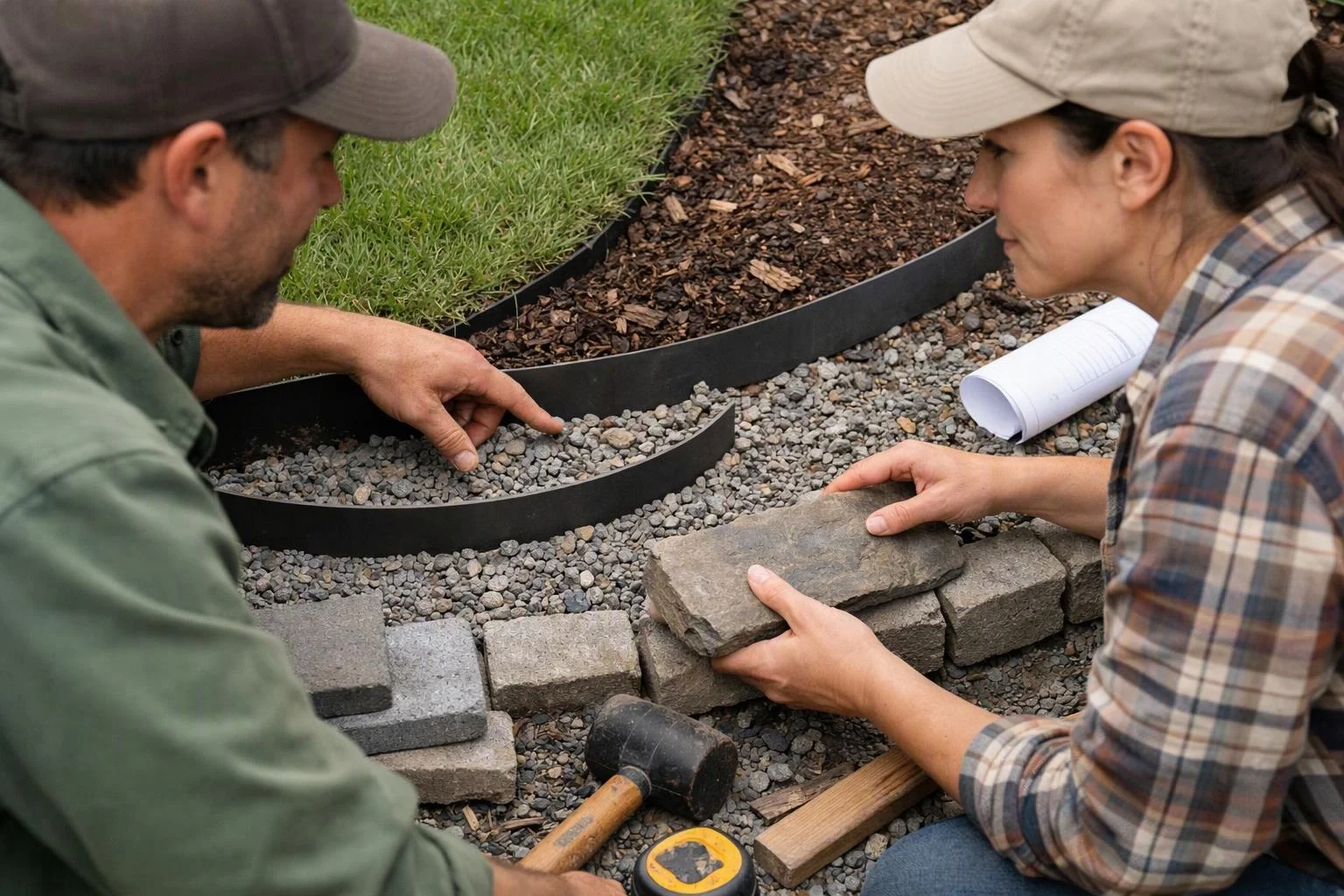
Edging works by placing a border along the line where two landscape surfaces meet. The border may sit level with the ground, rise slightly above it, or form a narrow trench. Each choice changes how visible the boundary looks and how easily a mower can pass.
Related glossary terms: Hardscape, Soil Amendment, Turf.
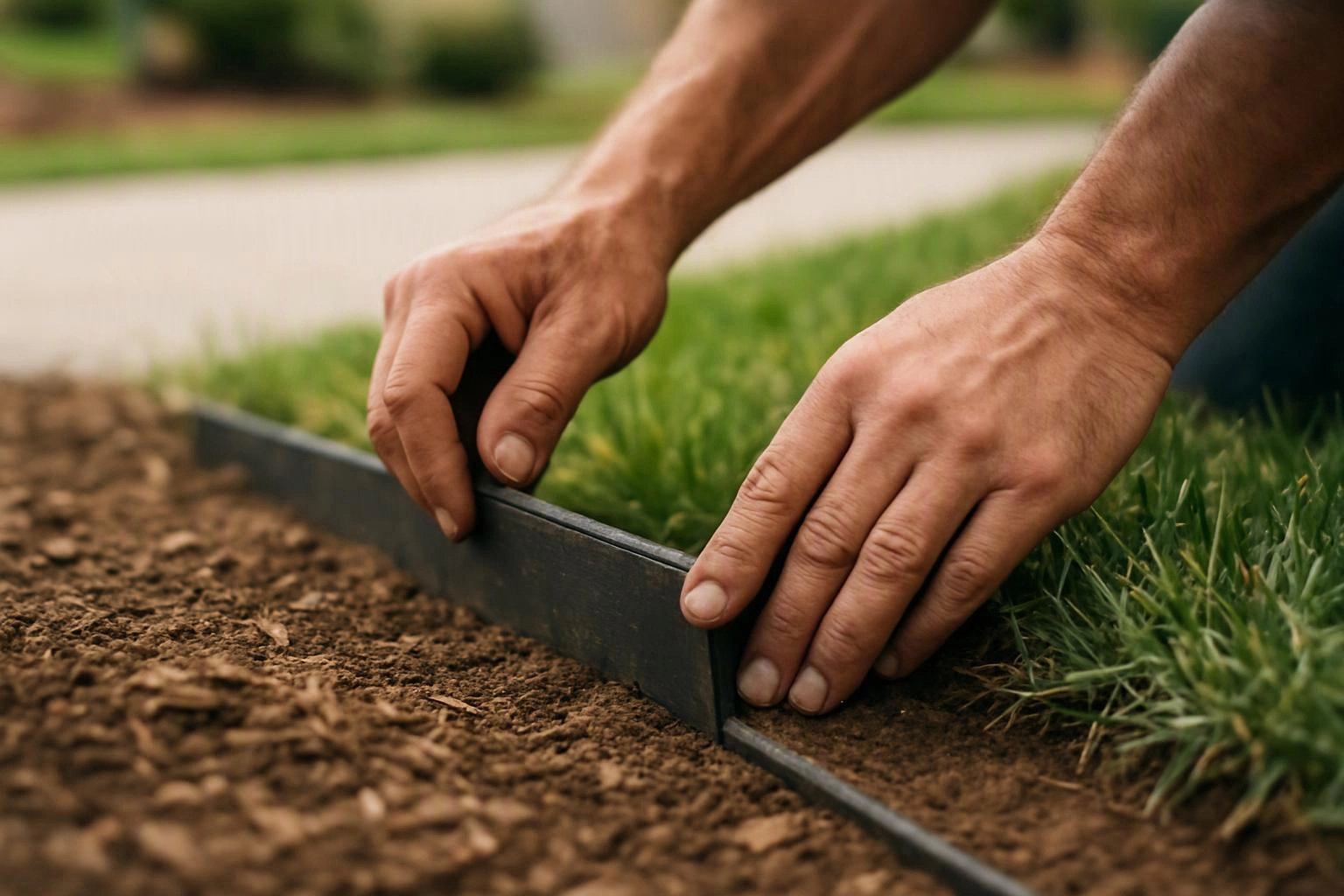
Garden edging can be made from metal, stone, brick, plastic, wood, or compacted soil. Installers first mark the desired line and remove loose soil or plants. They then set the material into a stable base and backfill the sides. A clean edge makes routine trimming easier and limits the spread of mulch or gravel.
Landscape borders differ from retaining structures. Edging separates spaces and contains loose surface materials. A retaining wall holds back soil and manages a change in ground height.
Expert Note
When we plan edging for Garden Design, we check the border against nearby trees, paths, lawn areas, and planting beds. We also look at drainage and maintenance access, so the edge supports the layout without creating a difficult strip to trim.
Edging in Practice: A Real-World Example
A garden design may place a stone edge between a planting bed and a lawn. The border keeps mulch in the bed and gives the lawn a clear line for trimming.
Related Services
Related Terms
Hardscape
Hardscape is the nonliving part of a landscape, including patios, walkways, walls, steps, fences, and stone…
Soil Amendment
Soil Amendment is material added to existing soil to change its physical condition or nutrient balance…
Turf
Turf is a ground covering made from living grass, synthetic grass, or both in related landscape…
Gravel Base
Gravel Base is a compacted layer of crushed stone placed beneath pavers or other hard surfaces…
LandscaperSammamishwa.com
Have Questions About Edging?
Contact LandscaperSammamishwa.com for practical guidance on Edging and related landscape architect company work in North Bend.