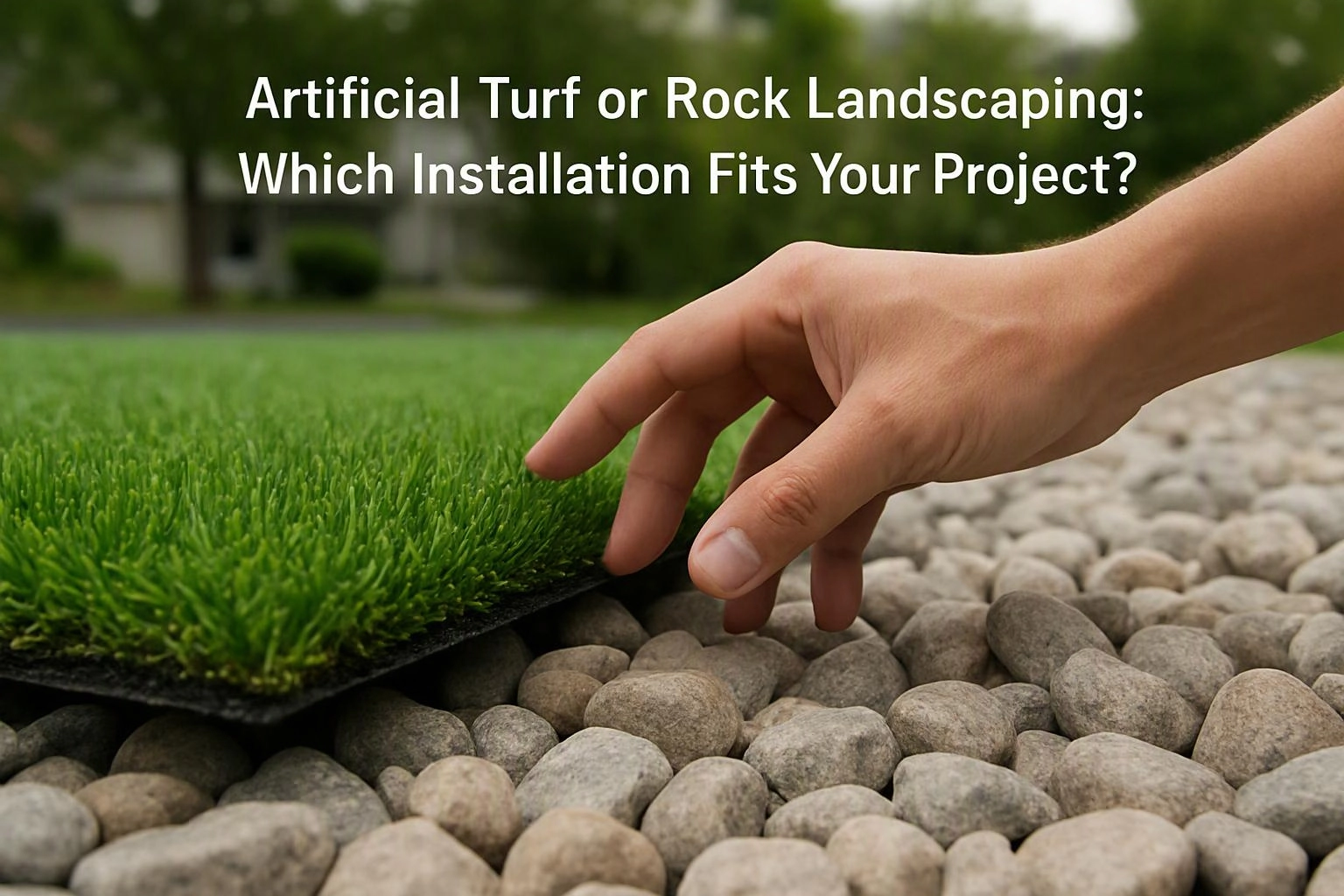
Artificial Turf or Rock Landscaping: Which Installation Fits Your Project?
Artificial turf fits spaces that need a soft, usable surface with consistent appearance, while rock landscaping fits low-maintenance areas that benefit from drainage and texture. LandscaperSammamishwa.com provides licensed landscaping work with upfront pricing and compares site use, drainage, maintenance, access, and installation scope before preparing a quote.
Written by Adam Gorski · 29 years of local experience
Request an EstimateArtificial Turf vs Rock Landscaping at a Glance
Artificial turf usually suits usable outdoor areas, while rock landscaping usually suits decorative, drainage-focused, and low-maintenance areas.
The right choice depends on how people and pets will use the yard. Site access, soil condition, grading, drainage, and landscape design also shape the installation scope.
| Factor | Artificial Turf | Rock Landscaping |
|---|---|---|
| Installation cost drivers | Removal, excavation, compacted base, drainage, seams, edging, and turf selection | Removal, grading, weed barrier, rock depth, edging, access, and stone selection |
| Installation timeline | Depends on preparation, drainage, seams, access, and project size | Depends on surface removal, grading, material delivery, and placement |
| Maintenance | Routine rinsing, debris removal, and surface care | Occasional raking, weed control, and stone redistribution |
| Best use | Play areas, pet areas, lawn replacement, and active yards | Landscape beds, slopes, drainage zones, and decorative yard design |
- Artificial turf: Choose it for a soft, usable surface with a consistent green appearance.
- Rock landscaping: Choose it for texture, drainage support, and low-maintenance ground cover.
What Makes Artificial Turf a Good Fit?
Artificial grass is a synthetic lawn surface that creates a consistent, usable outdoor area with planned base and drainage preparation.
Artificial turf installation starts with a review of the existing surface. Our crew may remove lawn or other ground cover, complete excavation, improve the soil base, and compact aggregate before laying the turf.
Drainage matters because water must move through the surface and away from structures. We review grading and soil condition before finalizing the installation plan.
Artificial Turf Advantages
Best for Artificial Turf
Artificial turf is best for front yard landscaping, backyard landscaping, pet areas, and other spaces that need a usable surface.
A synthetic lawn can suit homeowners who want a consistent green appearance. Our team also considers foot traffic, pet use, shade, drainage, and the surrounding landscape design.
What Makes Rock Landscaping a Good Fit?
Rock landscaping is a ground-cover design that adds texture, supports drainage, and reduces the need for lawn care in suitable areas.
Decorative rock, gravel, and landscape stone can define beds and paths. A properly prepared rock bed may also work as a mulch alternative where plants and soil conditions support it.
Rock landscaping installation includes surface preparation, grading, weed barrier placement where suitable, edging, and careful material placement. Our crew reviews water flow before selecting a drainage solution.
Rock Landscaping Advantages
Best for Rock Landscaping
Rock landscaping is best for low-maintenance landscape beds, sloped areas, drainage areas, xeric landscaping, and decorative yard design.
Rock works well where regular foot traffic is limited. Our team checks slope, soil movement, plant needs, and access before placing the rock bed.
Which Installation Fits Your Yard?
Artificial turf fits active, soft-surface areas, while rock fits decorative or drainage-focused areas with less regular use.
Choose turf when people, children, or pets need a comfortable surface. Choose rock when texture, water movement, and reduced lawn maintenance matter more.
Our team reviews yard use, site slope, soil condition, sun exposure, drainage needs, foot traffic, pets, and landscape style. These details help prevent a surface choice that looks good but performs poorly.
What Does Each Installation Involve?
Both installations begin with a site assessment and a review of drainage, access, and existing ground conditions.
Our crew adjusts the preparation plan to match the surface, soil, slope, and final use of the area.
What Changes the Cost of This Installation?
Installation cost depends on site preparation, access, material choice, drainage needs, removal, edging, and the total project scope.
Project size affects material and labor needs. Site access can also change handling requirements when equipment or deliveries cannot reach the work area easily.
Surface removal, grading, soil conditions, base preparation, drainage work, and material selection create different scopes. A detailed installation quote should show these items clearly.
We prepare upfront pricing after reviewing the area and the requested finish. You can request a quote through our Artificial Turf Installation service page when turf is under consideration.
What Should an Artificial Turf Installation Quote Include?
An artificial turf quote should explain the measured work, preparation, drainage, materials, installation details, cleanup, and exclusions.
A clear quote helps you understand the full scope before work begins. Our team uses the site conditions and project goals to define the installation plan.
How We Assess the Right Landscaping Surface
We assess how you’ll use the space, how water moves across it, and what preparation each surface requires before we recommend an installation.
At LandscaperSammamishwa.com, our licensed landscaping team reviews project goals, soil condition, access, grading, and drainage before preparing upfront pricing.
We explain the installation requirements for artificial turf installation or rock landscaping installation. Our plan accounts for surface removal, base preparation, edging, material selection, and cleanup.
When a project needs broader planning, a landscape design discussion can clarify plant placement, paths, borders, and surface transitions.
How Do You Request an Exact Installation Quote?
An exact installation quote starts with the project area, intended use, existing surface, access conditions, and preferred landscaping material.
Share project measurements when available, along with photos and notes about drainage or standing water. Our team can then define the material selection, installation scope, preparation work, and upfront pricing.
You can request a quote through our contact page. Include whether you’re considering artificial turf, decorative rock, gravel, or a combined design.
Questions About Turf and Rock Landscaping
Can artificial turf and rock landscaping be used together?
Yes, artificial turf and rock landscaping can be used together when each surface serves a clear purpose. Turf can define a usable area, while decorative rock can form borders, paths, drainage zones, or planting beds.
Does rock landscaping work on a sloped yard?
Yes, rock landscaping can work on a sloped yard when grading, edging, soil movement, and water flow are addressed. Our crew reviews the slope before choosing the rock bed design and drainage approach.
Is artificial turf suitable for a pet area?
Yes, artificial turf can suit a pet area when the product, base, drainage, and cleanup plan match pet use. Our team reviews water flow, surface access, and maintenance needs before planning the installation.
What drainage issues should be checked before installing artificial turf?
Artificial turf installation should account for standing water, soil that drains slowly, improper grading, roof runoff, and water moving toward structures. Our crew reviews these conditions before selecting base preparation and drainage details.
How should existing lawn or rock be removed before a new installation?
Existing lawn or rock should be removed according to the planned surface, soil condition, grading, and drainage needs. Our crew handles the removal and site preparation as part of the defined installation scope.
Written by Adam Gorski