
What Is Geotextile Fabric?
Geotextile Fabric is a synthetic textile used in soil and drainage work. The fabric separates soil from gravel, allows water to pass, and helps limit soil movement. In retaining wall construction, geotextile fabric supports a stable drainage zone behind the wall while reducing the mixing of fine soil with clean aggregate.
Quick Facts About Geotextile Fabric
Category
Soil separation and drainage material
Used for
Retaining wall drainage zones
Common confusion
Often confused with landscape fabric
Also called
Geotextile, Filter Fabric
Often discussed with
Retaining Wall Installation
Key Takeaways About Geotextile Fabric
- It separates soil layers without blocking water flow.
- It supports drainage behind retaining walls.
- It isn't the same as weed-control landscape fabric.
How Geotextile Fabric Works
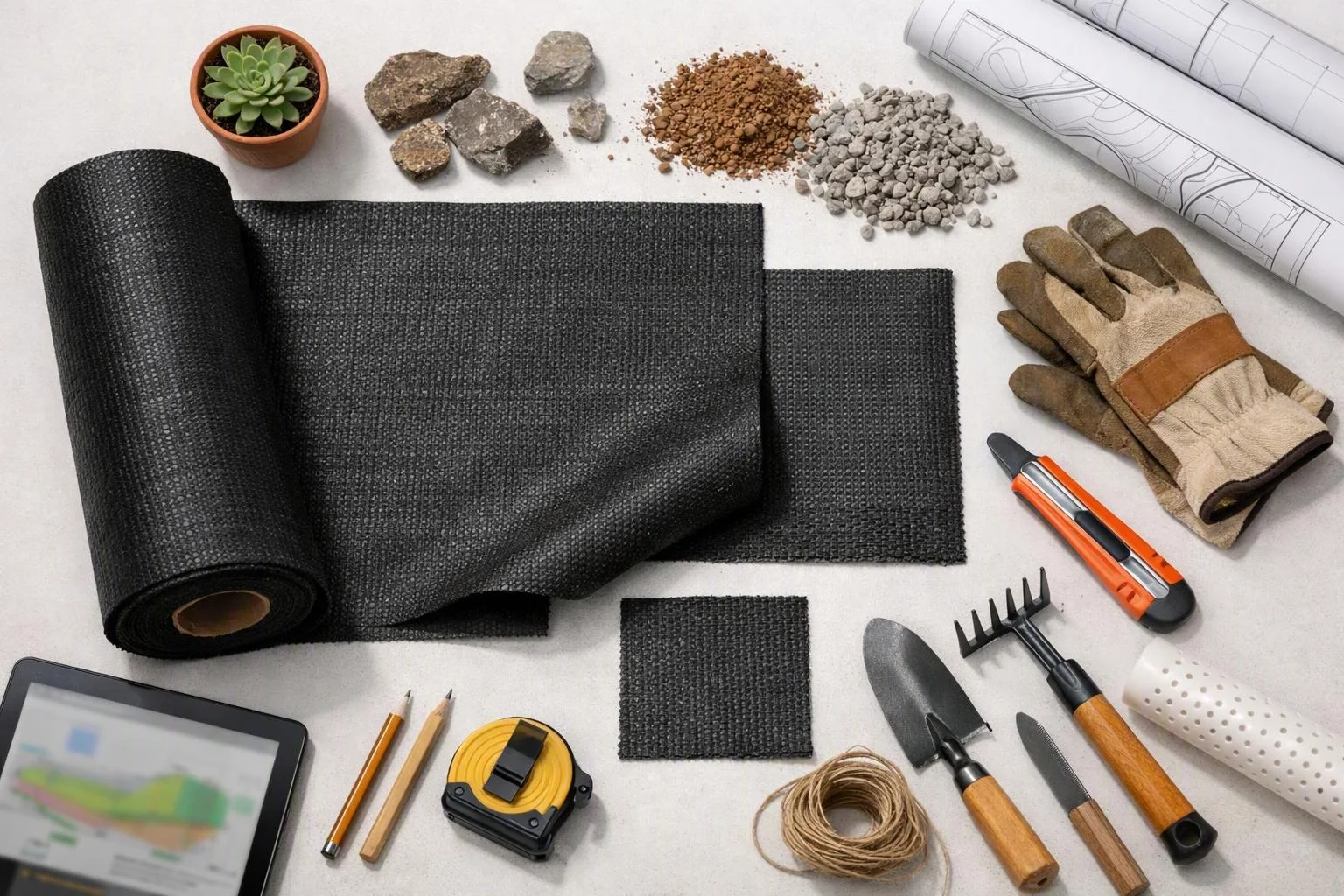
Geotextile Fabric separates soil from drainage gravel behind a retaining wall. Its small openings let water pass through while holding back fine soil particles. This helps keep the gravel open for drainage.
Related glossary terms: Aggregate, Gravel Base, Underdrain.
Installers place the fabric between different soil layers or wrap it around drainage material. The fabric must cover the intended separation area and stay in place during backfilling. Soil conditions help determine whether woven or nonwoven fabric fits the work.
Woven fabric has a tighter, more structured surface and suits separation work. Nonwoven fabric has a felt-like texture and supports filtration around drainage areas. A clean aggregate layer and a properly connected underdrain still remain important parts of the wall system.
Expert Note
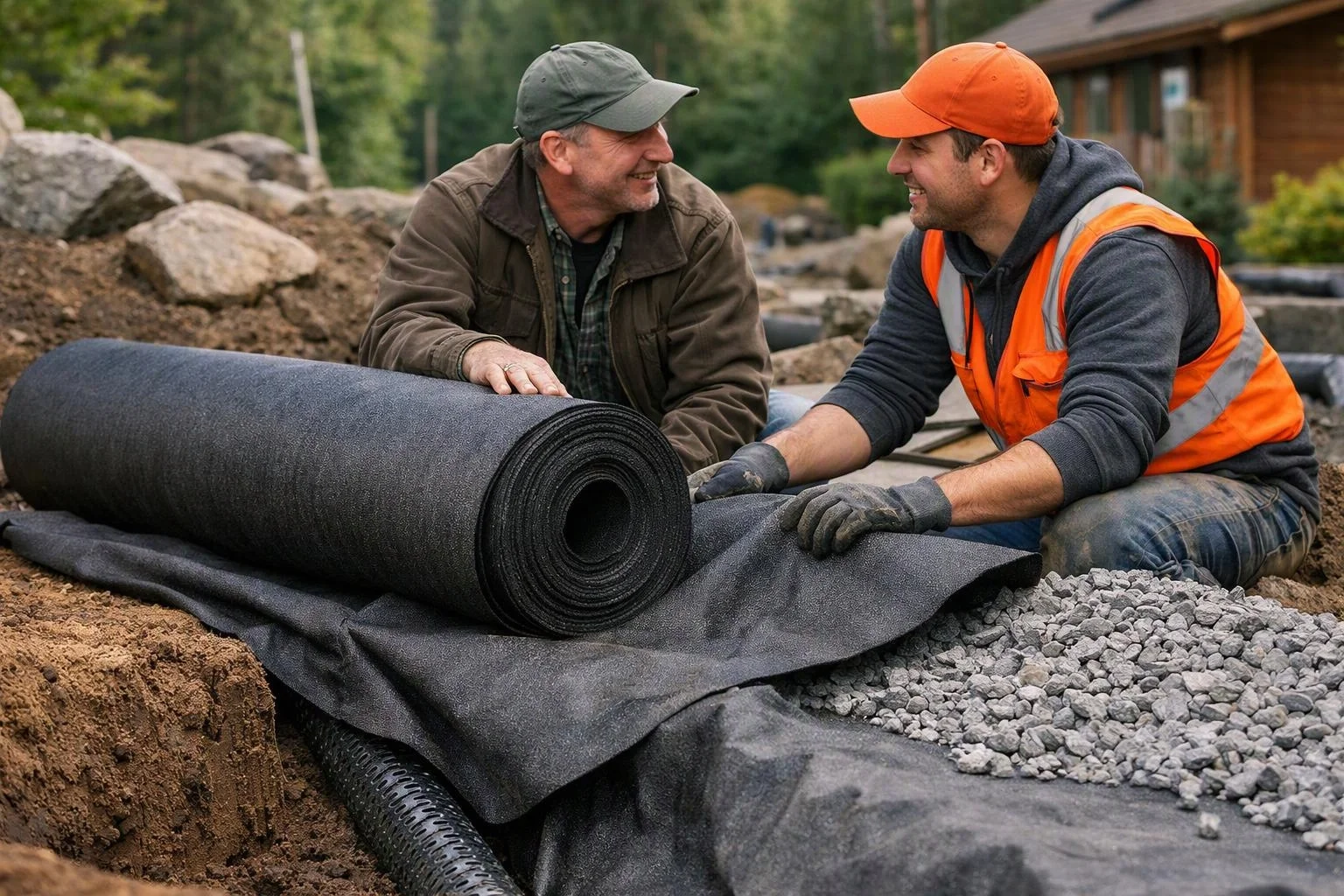
When we install retaining wall drainage, we place geotextile fabric where soil and aggregate need separation. We check that the fabric covers the drainage zone, stays free of tears, and remains in position as backfill is placed. We also check that water has a clear path away from the wall.
Geotextile Fabric in Practice: A Real-World Example
A retaining wall beside a sloped yard may need clean drainage gravel behind the wall. Geotextile fabric can separate that gravel from surrounding soil, so fine particles don't fill the drainage space.
Related Services
Related Terms
Aggregate
Aggregate is loose mineral material, such as crushed rock, gravel, or sand, used in landscape construction…
Gravel Base
Gravel Base is a compacted layer of crushed stone placed beneath pavers or other hard surfaces…
Underdrain
An underdrain is a buried drainage pipe that collects water from soil and carries it to…
Slope Stabilization
Slope Stabilization is the process of keeping sloped soil and rock in place so the ground…
LandscaperSammamishwa.com
Have Questions About Geotextile Fabric?
Contact LandscaperSammamishwa.com for practical guidance on Geotextile Fabric and related landscape architect company work in North Bend.