
What Is a Weep Hole?
A weep hole is a small opening through a retaining wall that lets trapped water drain from behind the wall. The opening connects the wall’s backfill to the outside face. By releasing water pressure, a weep hole helps reduce stress on the wall and limits water buildup after rain.
Quick Facts About Weep Hole
Category
Retaining wall drainage feature
Used for
Releasing water behind walls
Common confusion
Often mistaken for a wall defect
Also called
Weep Drain, Drainage hole
Often discussed with
Retaining Wall Installation
Key Takeaways About Weep Hole
- It is an opening through the wall, not a surface crack.
- Drainage behind the wall helps the opening work properly.
- A weep hole is not the same as an underdrain.
How Weep Hole Works
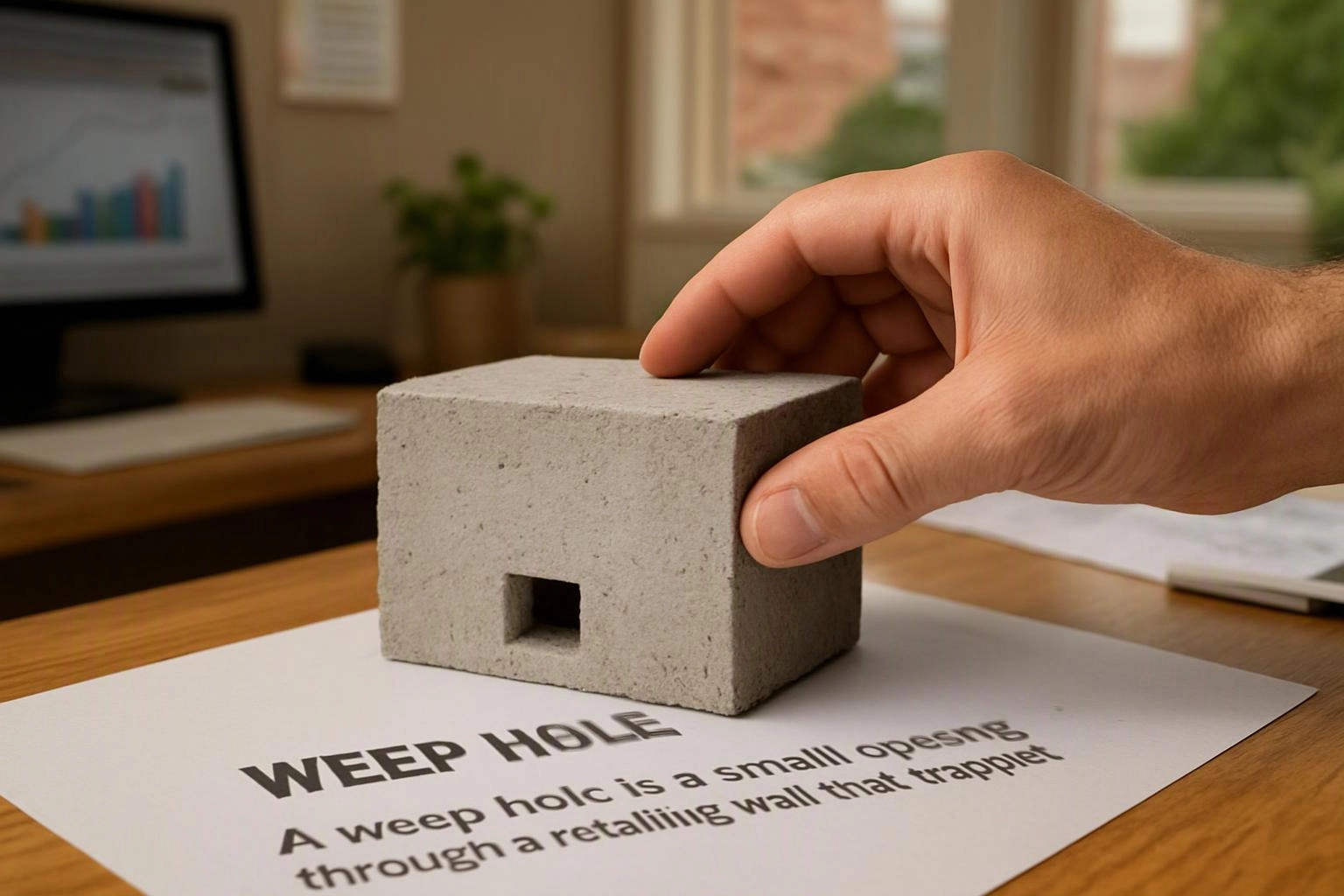
A weep hole gives water behind a retaining wall an exit through the wall face. Water moves through clean drainage aggregate or a drainage layer until it reaches the opening. The outlet then releases water away from the wall.
Related glossary terms: Underdrain, Geotextile Fabric, Gravel Base.
Drainage openings work with other wall components. A geotextile fabric can help keep soil from moving into the drainage material. An underdrain can collect water lower in the wall and carry it to a suitable outlet.
During retaining wall installation, the opening must remain clear and discharge where flowing water will not damage the soil. Soil, mulch, roots, or sealant can block the outlet. A blocked opening cannot release water as designed.
Expert Note
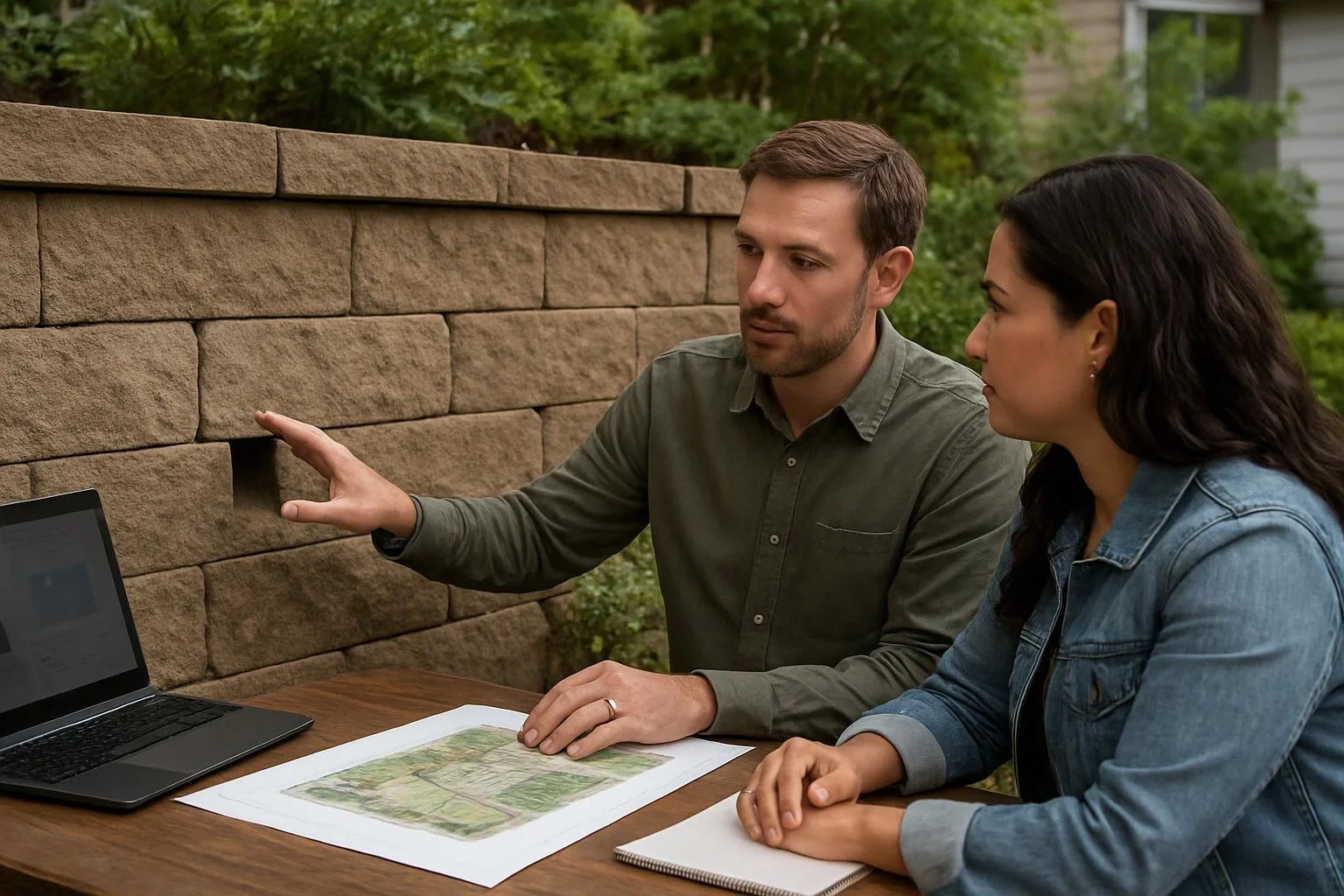
When we plan a retaining wall, we check how water will move through the backfill and where each outlet will discharge. We also keep drainage paths clear during construction, so soil does not block the wall openings.
Weep Hole in Practice: A Real-World Example
A sloped North Bend yard may need a retaining wall beside a planting area. Weep holes in the wall face can release water from behind the wall and direct it toward a safe drainage area.
Related Services
Related Terms
Underdrain
An underdrain is a buried drainage pipe that collects water from soil and carries it to…
Geotextile Fabric
Geotextile Fabric is a synthetic textile used in soil and drainage work. The fabric separates soil…
Gravel Base
Gravel Base is a compacted layer of crushed stone placed beneath pavers or other hard surfaces…
Slope Stabilization
Slope Stabilization is the process of keeping sloped soil and rock in place so the ground…
LandscaperSammamishwa.com
Have Questions About Weep Hole?
Contact LandscaperSammamishwa.com for practical guidance on Weep Hole and related landscape architect company work in North Bend.