Retaining Wall Repair or Replacement: Which Service Should You Hire?
Retaining wall repair suits localized damage with a stable wall, while replacement fits major movement, drainage failure, or structural instability. LandscaperSammamishwa.com checks the wall, soil, drainage, and grading before recommending the right service.
Written by Adam Gorski · 29 years of local experience
Request an EstimateShould You Repair or Replace a Retaining Wall?
Retaining wall repair is usually suitable when damage is limited and the wall remains stable. Replacement is the safer choice when movement, drainage failure, or structural damage affects the wall system.
We inspect the wall alignment, foundation, soil pressure, drainage, and grading. A stable wall with contained damage may need restoration, while a shifting wall may need a full rebuild.
Our team also checks erosion and water flow around the wall. These conditions can cause repeat damage if the underlying problem remains.
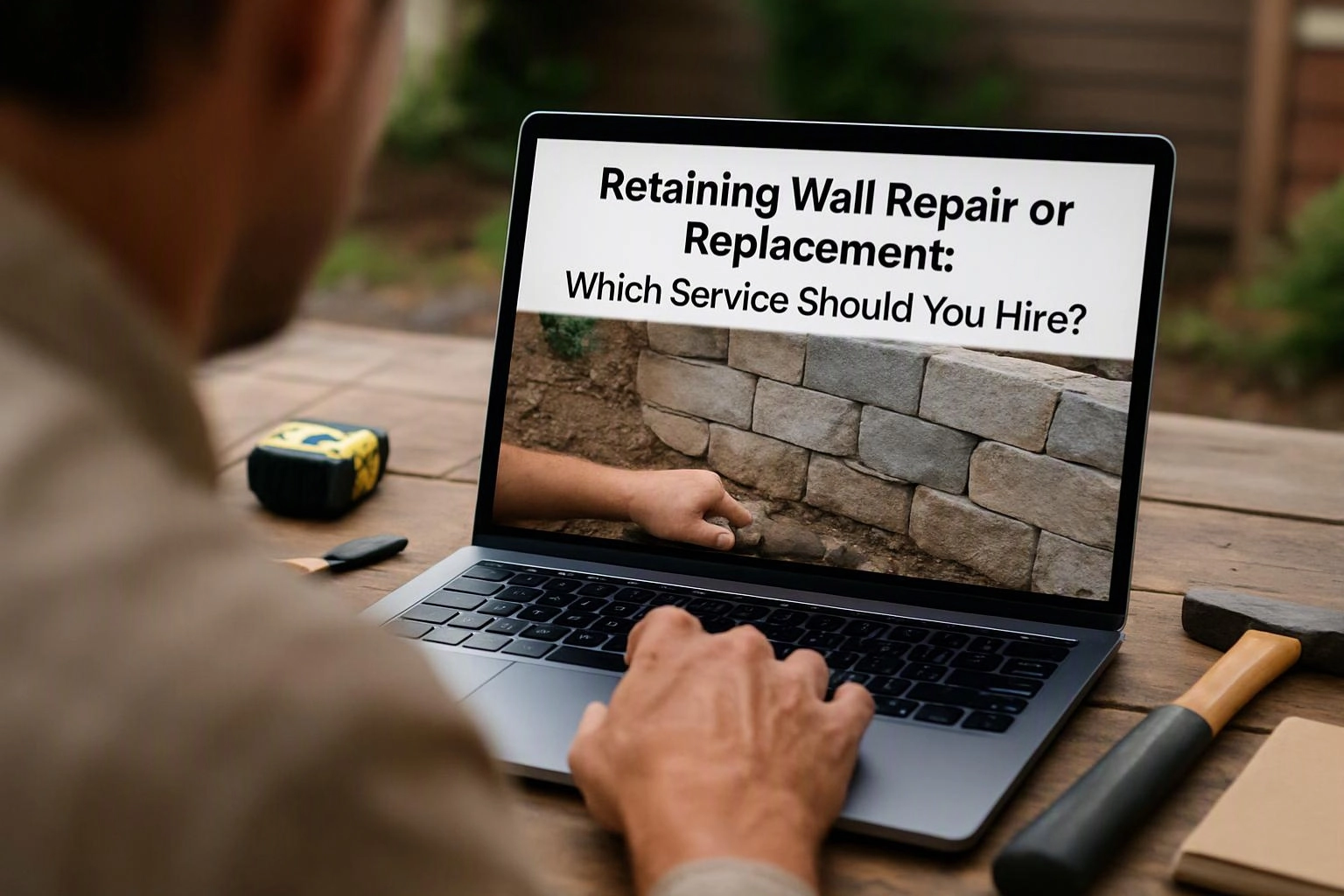
Retaining Wall Repair vs Replacement at a Glance
Retaining wall repair generally affects a smaller part of the property. Retaining wall replacement involves more site preparation because the wall system is rebuilt.
The right choice depends on structural condition, water management, access, and the wall materials. Our assessment connects those factors to the recommended project scope.
| Factor | Retaining Wall Repair | Retaining Wall Replacement |
|---|---|---|
| Best-fit conditions | Localized damage and stable structure | Severe movement or structural failure |
| Project cost drivers | Affected area, materials, drainage, and access | Demolition, excavation, foundation, drainage, and reconstruction |
| Project timeline | Usually less extensive work | More involved site preparation and construction |
| Maintenance | Focused on repaired areas and drainage | Focused on drainage, grading, and wall condition |
What Retaining Wall Repair Can Address
Retaining wall repair can address cracks, loose blocks, damaged drainage outlets, settlement, and surface erosion. The repair must match the wall materials and the source of the damage.
We check whether the wall has moved or only suffered surface damage. We also review water paths because blocked outlets can increase soil pressure behind the wall.
Our repair scope may include resetting wall blocks, correcting drainage, restoring eroded areas, or improving the wall alignment.
Why Choose Retaining Wall Repair?
Retaining wall repair fits a wall that can remain structurally sound after targeted work. Our team uses the existing structure when its foundation and drainage can support the repair.
Best for: Retaining wall repair is best for contained damage in a stable wall.
What Retaining Wall Replacement Involves
Retaining wall replacement rebuilds the wall system after the existing structure can no longer hold soil safely. Our crew removes damaged materials and prepares the site for a stronger design.
The work may include demolition, excavation, base preparation, and a new drainage system. We then place suitable backfill, reconstruct the wall, and restore the surrounding landscape.
Wall reconstruction must account for soil pressure, grading, foundation support, and water flow. These details help the finished wall perform as one connected system.
Why Choose Retaining Wall Replacement?
Retaining wall replacement fits a wall with severe movement, a failed foundation, or drainage that cannot be corrected through limited repairs.
Best for: Retaining wall replacement is best for structural instability and long-term stability concerns.
What Changes the Cost of This Retaining Wall Project?
The project cost depends on the wall's size, material, damage, access, excavation needs, drainage work, and grading requirements. Our estimate explains the recommended service, included work, materials, site preparation, drainage, cleanup, and any grading needed.
Site access can affect equipment use, material handling, excavation, and cleanup. Soil conditions can also change the work required behind and below the wall.
Wall length and height affect material quantities and structural needs. The retaining wall estimate should connect each cost driver to the project scope.
We can also explain when Retaining Wall Repair is suitable and when a replacement or new design is more appropriate.
What Should a Retaining Wall Estimate Include?
A retaining wall estimate should identify the wall condition, recommended service, work scope, materials, drainage, grading, site preparation, and cleanup. We provide upfront pricing for the defined work.
To request a defined estimate, contact our team through our contact page. We use the site assessment to explain what the proposed work includes.
How We Decide Between Repair and Replacement
Our retaining wall inspection starts with wall movement, foundation condition, drainage, soil pressure, and grading. We use these findings to select the safest service scope.
Our process separates visible damage from the conditions causing it. That helps prevent a repair from being used where a replacement is safer.
Warning Signs That Need Prompt Retaining Wall Attention
A leaning retaining wall, bulging retaining wall, or cracked retaining wall needs prompt attention when movement is increasing. These signs can show that soil pressure or drainage is affecting structural stability.
Soil loss, standing water, blocked drainage, and unstable ground also need review. Water can add pressure behind the wall and carry soil through gaps.
Do not work beside an unstable wall or enter an unsafe excavation. Contact our team so we can assess the condition and explain the appropriate landscaping service.
Which Retaining Wall Service Fits Your Property?
Retaining wall repair fits contained damage in a stable wall, while replacement fits structural failure or a wall system that cannot drain and hold soil safely. We can also coordinate retaining wall installation and grading services when the site needs a new design or changed drainage flow.
Retaining Wall Installation may suit a new slope, changed site layout, or property improvement project. Our team reviews site conditions before selecting wall materials, drainage, foundation support, and grading.
We can connect repair, replacement, installation, and land grading into one project scope when the site needs broader landscape restoration.
Adam Gorski is the author of this guide.
Questions About Retaining Wall Repair or Replacement
Can a leaning retaining wall be repaired?
Yes, a leaning retaining wall can sometimes be repaired when movement is limited and the foundation and drainage remain sound. Our team checks wall movement, soil pressure, and drainage before recommending repair or replacement.
What signs show that a retaining wall needs replacement?
Severe leaning, bulging, major cracks, wall failure, unstable ground, and a failed foundation can show that a retaining wall needs replacement. Our inspection also checks whether drainage problems can be corrected without rebuilding the wall.
Does poor drainage cause retaining wall failure?
Yes, poor drainage can increase water pressure behind a retaining wall and contribute to movement or failure. We check drainage outlets, soil conditions, grading, and water flow as part of the assessment.
Can grading services help prevent retaining wall problems?
Yes, grading services can help direct water away from the wall and reduce erosion around the site. Our team reviews grading with drainage and soil pressure before defining the project scope.