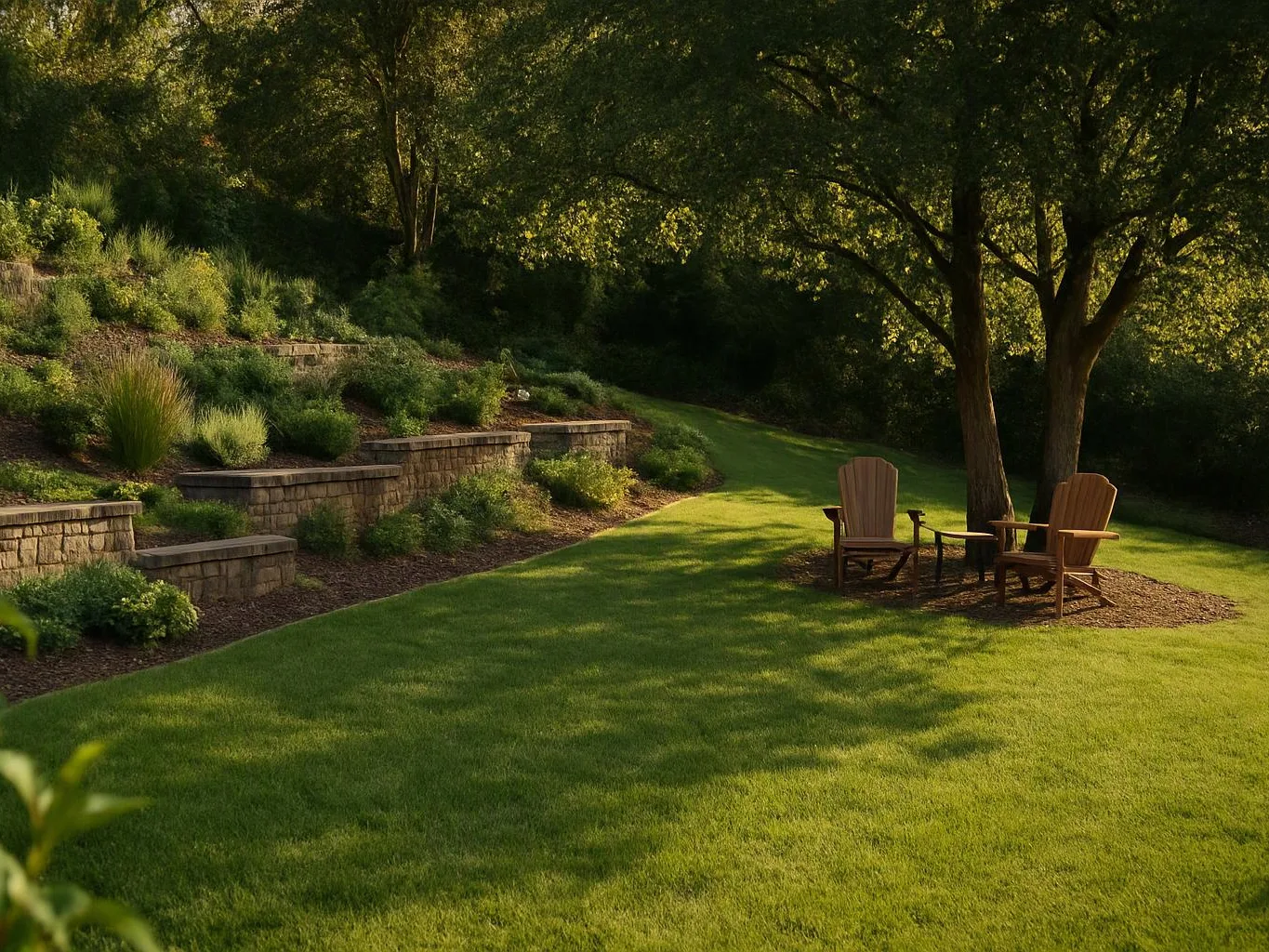
Warning Signs Your Retaining Wall Needs Attention
Retaining wall warning signs include leaning, bulging, spreading cracks, water pressure, soil loss, and shifted blocks or stones. LandscaperSammamishwa.com checks the wall, drainage, soil, and surrounding grade to recommend repair or replacement.
Written by Adam Gorski · 29 years of local experience
Request an EstimateWhat Are the Warning Signs of Retaining Wall Failure?
A retaining wall may need attention when the wall moves, cracks, loses soil, or shows water pressure. Early changes can reveal problems before the wall becomes harder to repair.
Look for these visible signs around the wall face, joints, footing, and nearby landscape.
Why Is the Retaining Wall Leaning or Bulging?
A leaning or bulging retaining wall usually shows that soil pressure, water, or a weak foundation is moving the wall.
Lateral soil pressure increases when backfill soil becomes saturated. Water adds weight and creates hydrostatic pressure behind the wall.
A weak retaining wall footing can also allow settlement or rotation. Poor wall drainage makes these forces harder for the structure to resist.
Nearby grading can send surface runoff toward the wall. Roots, added soil, or changes around the landscape may also increase pressure.
Are Cracks in a Retaining Wall Serious?
Cracks in a retaining wall can be serious when they spread, widen, repeat through several blocks, or appear with wall movement.
Small surface cracks may affect only the wall face. Cracks through masonry, concrete, or block joints can point to structural movement.
Watch for cracks that return after patching, open near the footing, or connect with a leaning or bulging area. We inspect the full wall before deciding whether repair is suitable.
What Does Water Coming Through a Retaining Wall Mean?
Water coming through a retaining wall can signal blocked drainage or rising pressure behind the wall.
A retaining wall drainage system may use drainage gravel, weep holes, and a perforated drain pipe. These parts help collect and release water from the backfill.
Blocked outlets can trap water and increase hydrostatic pressure. Surface runoff can create the same problem when the landscape grade directs water toward the wall.
Water stains, soft soil, algae, and repeated seepage deserve attention. Our team traces the drainage path and checks whether water is escaping as planned.
What Should You Do When a Retaining Wall Shows These Signs?
A retaining wall with movement or drainage problems needs a careful inspection before repair work begins.
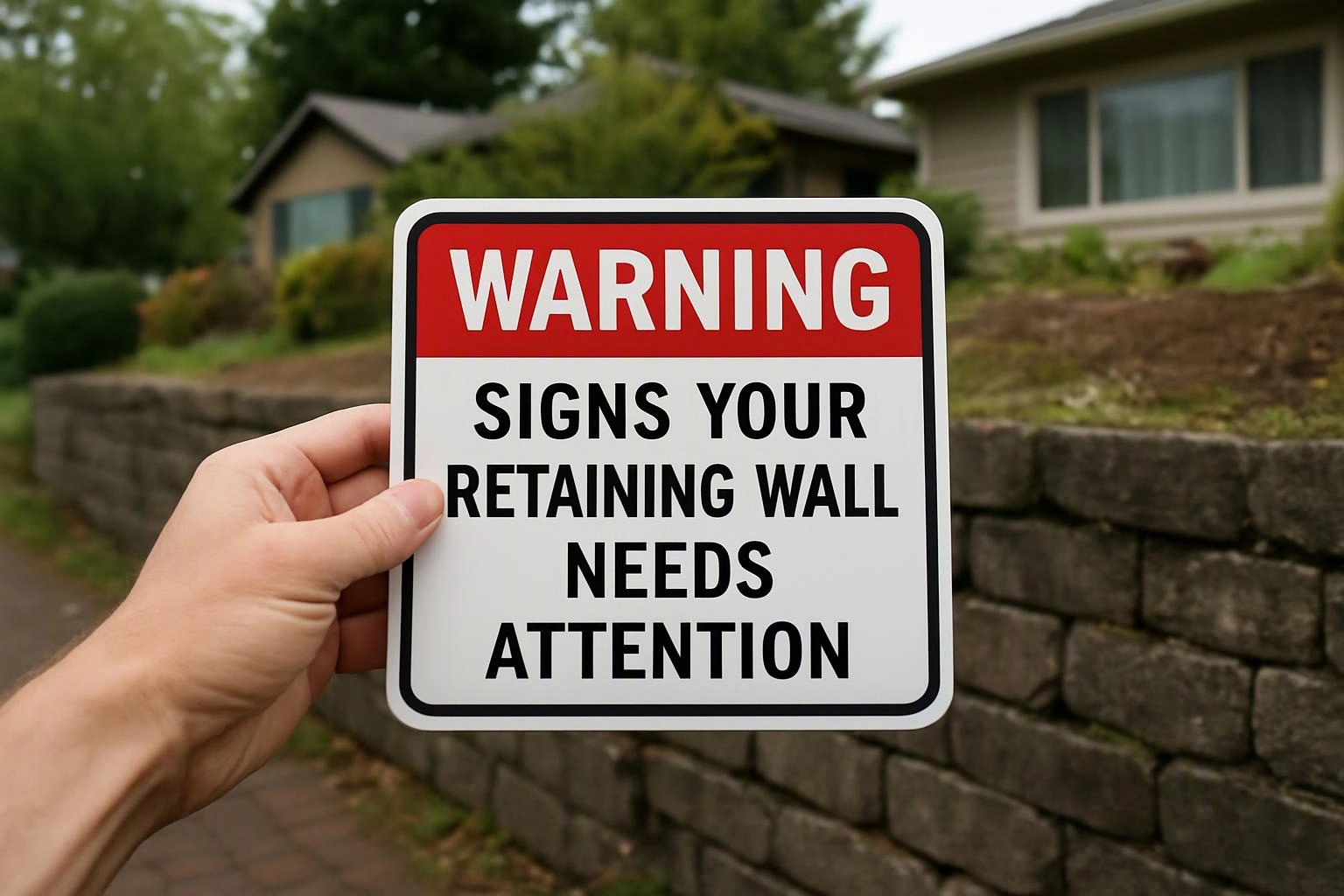
Keep people and heavy equipment away from areas that appear unstable. You can photograph changes, note water flow, and mark where soil erosion occurs.
Our team checks the wall movement, soil conditions, wall footing, drainage, and surrounding grade. We then explain whether retaining wall repair, drainage correction, or replacement fits the problem.
DIY Checks or Retaining Wall Repair?
You can observe and document visible changes, while we evaluate wall stability, drainage, soil pressure, and repair needs.
Simple observations help us understand when the problem appeared. Structural movement and drainage work require a careful assessment before anyone disturbs the wall.
| Factor | What you can do yourself | What we do |
|---|---|---|
| Visible changes | Take photos and note leaning, cracks, gaps, or soil loss. | Check wall alignment and compare affected areas across the structure. |
| Drainage | Observe water flow without digging behind the wall. | Assess weep holes, drain paths, surface runoff, and drainage gravel. |
| Soil pressure | Record soft soil, erosion, or changes near the wall. | Evaluate backfill conditions and forces affecting wall stability. |
| Repair decision | Avoid removing blocks or filling structural cracks. | Recommend a repair approach or retaining wall installation when needed. |
Our retaining wall repair assessment focuses on the cause, not only the visible damage.
How We Assess a Retaining Wall Before Repair
A retaining wall inspection starts with wall alignment, visible damage, and the condition of the foundation.
Our team checks the wall face, joints, footing, and nearby soil grade. We look for settlement, rotation, surface displacement, and signs of soil movement.
We also trace the drainage path behind and around the wall. The assessment includes surface runoff, outlets, drainage gravel, and the adjacent landscape.
Our findings help define the project scope. They also show whether the wall needs focused repair, drainage work, or a new retaining wall installation.
What Happens After We Identify the Problem?
After we identify the cause, we match the project scope to the wall's condition and the surrounding landscape.
Repair decisions depend on wall stability, access, materials, drainage, and the condition of the supporting soil.
Can a Retaining Wall Fail Without Obvious Cracks?
A retaining wall can fail without obvious cracks when it settles, shifts, drains poorly, or loses supporting soil.
Wall settlement may show as a low section, uneven top edge, or open joint. Soil loss can leave voids beneath the footing or behind the wall.
Drainage failure may appear as wet ground, plant loss, staining, or repeated surface displacement. These signs can develop before clear cracks appear.
We inspect the entire landscape structure because the visible symptom may not show the main cause.
Questions About Retaining Wall Warning Signs
Can landscaping cause a retaining wall to move?
Yes, landscaping can cause a retaining wall to move when added soil, roots, irrigation, or changed grading increases pressure or directs water behind the wall.
What should I document before requesting retaining wall repair?
Document the wall's leaning, cracks, bulges, water seepage, soil erosion, shifted blocks, and changes in nearby grading. Photos from the same viewing points can help show how wall movement develops.
Should I repair or replace a damaged retaining wall?
Repair suits damage that remains localized and stable, while replacement may suit severe movement, failed drainage, foundation problems, or widespread wall damage. We assess the wall and supporting soil before recommending either option.
Author: Adam Gorski
Request an assessment so we can review the wall, drainage, soil pressure, and project scope.
Related Resources
Landscape Architect or Landscape Designer: Which Should You Hire?
Compared ToLandscape Design Plans or a Contractor’s Estimate: What Do You Need?
Compared ToRetaining Wall Repair or Replacement: Which Service Should You Hire?
Compared ToFull-Service Front Yard Landscaping or Separate Contractors?