When Yard Water Near Your Home Needs Attention
Water pooling near your house foundation often points to poor grading, blocked drainage, or soil that holds water. At LandscaperSammamishwa.com, we check the flow path and can recommend yard drainage, French drain, or grading work when needed.
Written by Adam Gorski · 29 years of local experience
Request an Estimate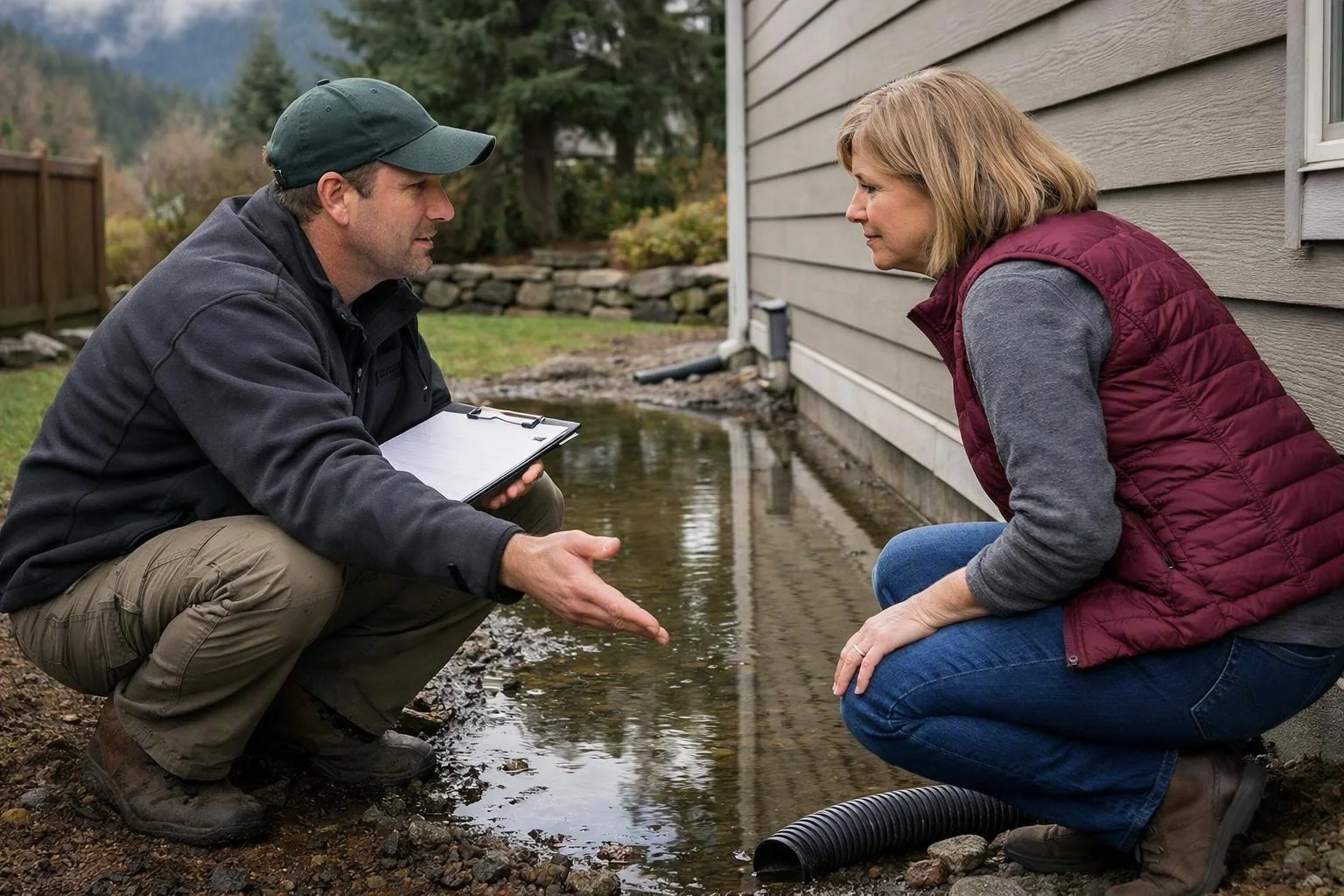
Why Water Pools Near a House Foundation
Water pooling near a house foundation happens when runoff can't move away or soak into the ground effectively.
Surface water may collect because the yard slope sends runoff toward the house. Poor grading can also leave low spots beside the foundation.
Blocked drainage can slow water movement from downspouts and other yard areas. Soil drainage matters too, especially when compacted soil or heavy clay holds water near the surface.
Warning Signs That Yard Water Needs Attention
These warning signs show that water may be staying too close to the house. Look for patterns after rain and note where wet ground remains.
One sign may have a simple cause, such as a blocked outlet. Repeated signs point to a broader yard drainage problem that needs a closer assessment.
What Standing Water Near the Foundation Can Mean
Standing water near a foundation means runoff is staying close to the structure, which can increase moisture concerns and may contribute to basement leaks.
Foundation drainage helps move water away from the foundation wall. When that path is blocked or poorly directed, soil saturation can keep moisture against the structure.
Hydrostatic pressure can push moisture through weak points, cracks, or joints. That moisture intrusion may appear as damp walls, peeling finishes, or a basement leak.
How We Trace the Source of Yard Water
Our team traces the water flow path, checks the yard slope, and looks for drainage points that need correction.
We begin with a drainage assessment of low areas, soil condition, and visible surface runoff. We also check how downspouts discharge and whether water reaches a safe drainage outlet.
Our yard drainage service focuses on the source, not only the wet spot. That helps us match the drainage solution to the way water moves across the property.
DIY Checks vs Calling Us for Yard Drainage
You can observe water movement safely, while we handle drainage design, grading, and installation work. Simple observations help show where the problem starts, but they don't replace a full drainage assessment.
| Factor | What you can do yourself | What we do |
|---|---|---|
| DIY drainage checks | Observe where water collects and where the lawn stays wet. | Trace the water flow path and assess the yard slope. |
| Yard drainage installation | Keep visible outlets clear when you can do so safely. | Plan and install drainage features that fit the site. |
| French drain installation | Identify areas where subsurface water may be collecting. | Design the drain route, pipe placement, and drainage outlet. |
| Grading services | Look for low spots and soil movement near the home. | Plan grading correction so surface water moves away from the foundation. |
| Landscape consultation | Record changes after rain and share clear site details. | Connect the visible signs to a practical drainage design. |
Avoid digging where buried utilities or drainage lines may be present. We handle installation and grading work when the correction needs design, equipment, or excavation.
When Yard Drainage Needs a Planned Solution
Yard drainage needs a planned solution when water returns, reaches the foundation, or follows a route that simple maintenance can't correct.
A French drain can collect subsurface water and direct it toward a suitable outlet. A surface drain may help when runoff travels across paved areas or gathers in a low spot.
A swale can guide surface water through a shaped landscape channel. Grading correction can improve the yard slope when poor grading sends runoff toward the house.
The right drainage system depends on the water source, soil drainage, available space, and outlet location. Our team can discuss these choices during a landscape consultation.
What We Need to Prepare a Yard Drainage Quote
Our drainage quote depends on the water source, yard slope, soil, access, and drainage work the property needs.
We review the yard size and identify where water enters or collects. We also consider soil type, existing downspouts, drainage outlets, and the route required for the design.
The quote explains the recommended drainage solution and the work it includes. Contact us through our contact page so we can review the site and prepare an exact quote.
Author: Adam Gorski
Related Resources
Landscape Architect or Landscape Designer: Which Should You Hire?
Compared ToLandscape Design Plans or a Contractor’s Estimate: What Do You Need?
Compared ToRetaining Wall Repair or Replacement: Which Service Should You Hire?
Compared ToFull-Service Front Yard Landscaping or Separate Contractors?