Signs Your Sprinkler System Is Not Watering Evenly
Signs your sprinkler system needs repair include dry spots, soggy areas, weak spray, clogged or tilted heads, leaks, and uneven plant growth. At LandscaperSammamishwa.com, we check coverage, water flow, sprinkler heads, and underground lines to locate the cause.
Written by Adam Gorski · 29 years of local experience
Request an Estimate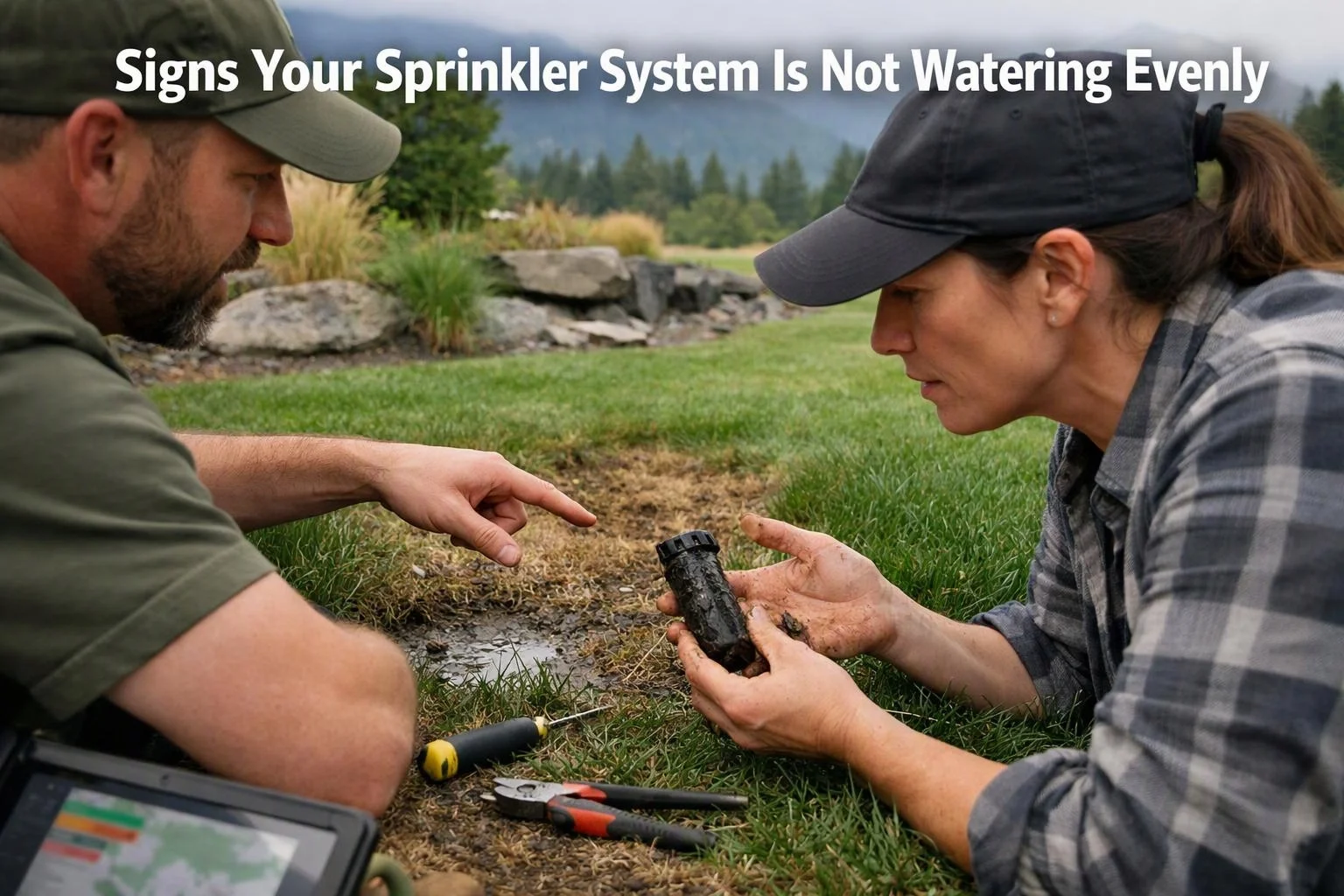
Uneven watering means parts of a lawn or landscape receive too much or too little water. Our team can inspect the system and explain whether the problem involves a head, valve, controller, pressure issue, or underground pipe.
Author: Adam Gorski
What Uneven Sprinkler Watering Looks Like
A sprinkler system shows uneven watering when irrigation coverage changes across the same lawn or planting area. One section may look dry while another stays wet after the same zone runs.
Grass may lose color in areas that receive too little water. Landscape plants may wilt, grow slowly, or develop different growth patterns from nearby plants. Overspray can also wet sidewalks, beds, or other areas that do not need irrigation.
Good coverage depends on the spray pattern, head spacing, water pressure, soil moisture, and drainage. When one part fails, the lawn can show the problem before the irrigation equipment does.
Warning Signs Your Sprinkler System Needs Repair
These visible warning signs often point to an irrigation problem that needs closer inspection. Look for changes that repeat after the sprinkler zone runs.
These signs can occur together, but they don't always share one cause. Our team tests the affected zone before choosing a repair.
Why Some Areas Are Dry While Others Stay Soggy
Uneven watering happens when sprinkler coverage, water flow, drainage, or underground piping does not work as designed.
Dry spots can result from poor sprinkler spacing, a clogged nozzle, a tilted head, or low water pressure. Soggy lawn areas can result from overspray, runoff, blocked drainage, or a valve that does not close correctly.
A broken sprinkler pipe can cause a wet spot in the lawn while reducing water to other heads. The location of the wet area can help us trace the likely fault, but underground pipe damage needs proper testing before digging.
Soil type and slope also affect how water moves. A lawn may receive enough spray but still develop runoff when the soil or drainage cannot absorb water evenly.
What You Can Check Before Scheduling Sprinkler Repair
You can make a safe visual check of the irrigation system before contacting our team. Avoid opening pressurized lines or handling irrigation wiring when you aren't trained to do so.
Write down which zone shows the problem and where the dry or wet areas appear. That information helps our team focus the irrigation inspection.
DIY Checks Compared With Our Sprinkler Repair Work
Homeowner inspection can identify visible symptoms, while our team verifies the parts that control water flow. The table shows where a simple check ends and irrigation system repair begins.
| Factor | What you can do yourself | What we do |
|---|---|---|
| Homeowner inspection | Observe dry spots, soggy areas, weak spray, and visible leaks. | Trace the symptom through the affected zone and its components. |
| Sprinkler head replacement | Identify a damaged or tilted head for review. | Select and install a compatible head, nozzle, or riser. |
| Water pressure testing | Notice weak spray or heads barely popping up. | Test water pressure and compare flow across irrigation zones. |
| Underground pipe | Report wet ground, sink areas, or sudden flow changes. | Locate and repair underground sprinkler pipe damage. |
| Irrigation controller | Check schedules and zone selections. | Verify controller operation and zone timing during diagnosis. |
Visible checks are useful, but they cannot confirm hidden pipe or pressure faults. Our team handles testing and repairs when the cause isn't clear.
How We Diagnose Uneven Sprinkler Coverage
Our irrigation inspection starts by matching lawn symptoms with the sprinkler zones that serve them. We run the affected zones and observe the spray pattern, head movement, and water flow.
We check water pressure, valves, nozzles, risers, and sprinkler heads for faults. We also review the irrigation controller to confirm that each zone operates as intended.
When surface checks don't explain the problem, we investigate the underground irrigation pipe. Our team uses the visible leak location, pressure changes, and zone behavior to guide the repair.
For help with this process, our Irrigation System Repair service addresses coverage, flow, and pipe problems.
When Sprinkler Repair Is Better Than Replacing the System
Sprinkler repair is usually the better choice when the main layout and irrigation zones still suit the landscape. A failed sprinkler head, valve, controller, or section of pipe doesn't automatically make the whole system unusable.
Replacement may make more sense when pipe damage is widespread or the system no longer matches the landscape design. An outdated layout can also create repeated coverage problems that individual repairs won't solve.
Our team compares the failed parts with the system's overall condition. We explain whether targeted irrigation system repair or new sprinkler system installation better supports reliable coverage.
What Changes the Cost of Fixing Uneven Watering?
The cost depends on the failed part, access to the irrigation line, the number of affected zones, and whether repair or installation work is needed. We review those conditions and provide an exact quote.
Sprinkler head repair may involve a nozzle, riser, or complete head. Valve repair, water pressure problems, underground pipe repair, and controller faults require different materials and labor.
Access also matters when a leaking line sits below established lawn or planting beds. Our quote reflects the affected irrigation zone, the repair method, and the work needed to restore the spray pattern.
Send our team the location of the dry spot, soggy area, or visible leak to begin the conversation.
Related Resources
Garden Designer or Landscaper: Who Should You Hire?
What Goes With ItNative Plant Landscaping: Benefits, Design Choices, and Planting Plans
Compared ToFrench Drain or Broader Yard Drainage Work: Which Should You Request?
What Goes With ItLandscape Design Styles: How to Choose a Look for Your Yard