French Drain or Broader Yard Drainage Work: Which Should You Request?
French drain installation suits subsurface water that needs a defined drainage path, while broader yard drainage work fits surface runoff, grading, irrigation issues, or combined causes. LandscaperSammamishwa.com checks the water source and site conditions before recommending the right scope.
Written by Adam Gorski · 29 years of local experience
Request an EstimateFrench Drain vs Yard Drainage Work at a Glance
French drains target subsurface water, while broader yard drainage work addresses surface flow, grade, irrigation problems, or several causes together. The right request depends on where the water starts and how it moves.
| Factor | French Drain | Broader Yard Drainage |
|---|---|---|
| Cost drivers | Buried pipe route, trenching, aggregate, and outlet work | Diagnosis, grading, drains, irrigation work, and restoration |
| Timeline | Often a focused scope when the water path is clear | May require more planning when several causes interact |
| Maintenance | Needs access to the outlet and clean drainage paths | Depends on drain access, grading, irrigation, and runoff control |
| Best for | Subsurface water with a workable downhill outlet | Surface runoff, low spots, poor grade, or mixed causes |
- French drain: Best when water travels through soil and needs collection below ground.
- Yard drainage: Best when surface flow, grading, irrigation, or several issues cause the problem.
When a French Drain Is the Better Request
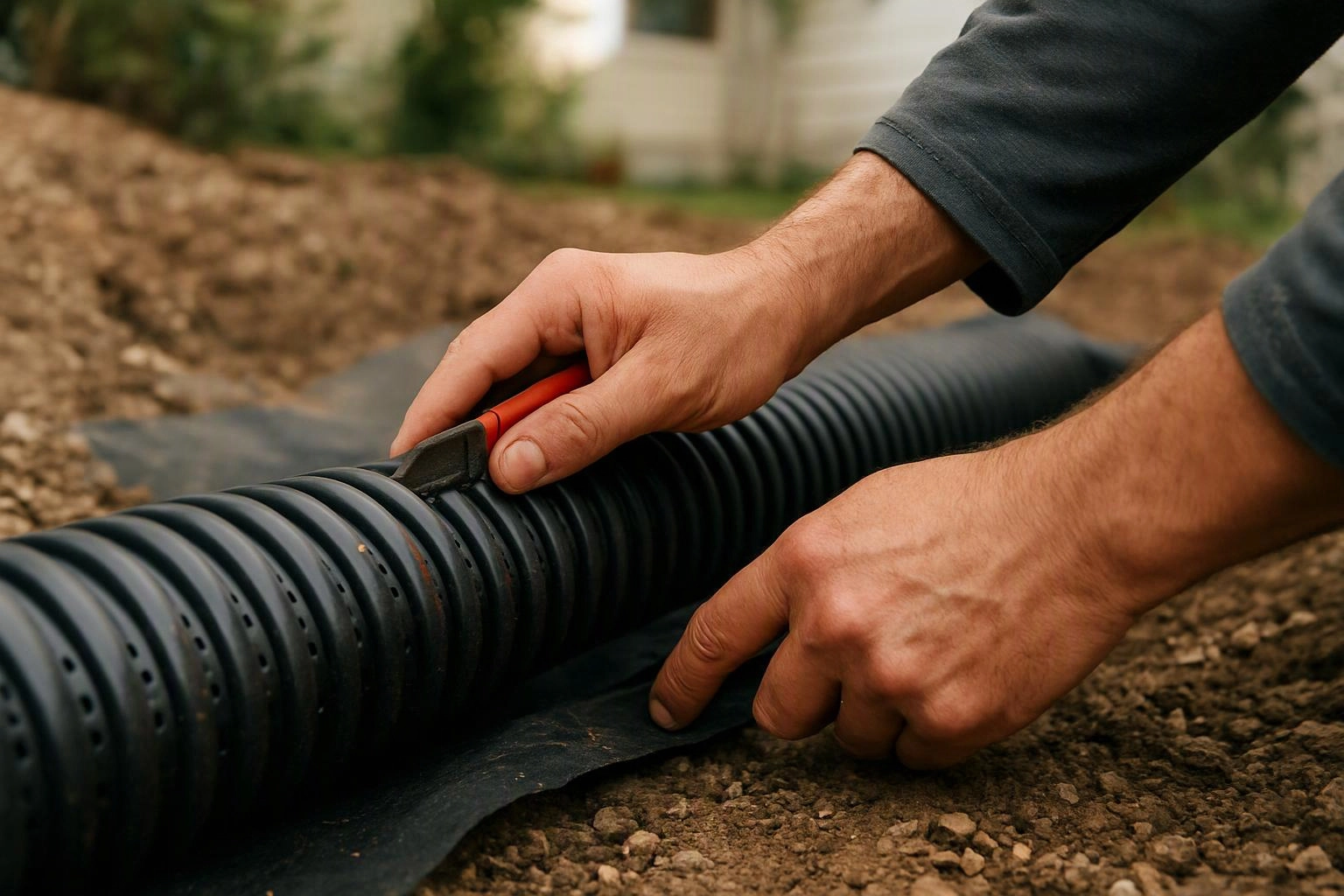
French drain installation is the better request when water moves through soil and needs a below-ground collection route. A French drain is a trench system that uses a perforated drain pipe and drainage aggregate to collect subsurface water.
Groundwater can create soil saturation near a foundation area. In some cases, trapped water also adds hydrostatic pressure. We check the water source, soil conditions, and possible drainage outlet before choosing the route.
Our French Drain Installation service is planned around safe discharge and practical maintenance access. The system must have somewhere suitable to send collected water.
French Drain Advantages and Best-Fit Verdict
A French drain is best for a defined subsurface water problem with a workable outlet. Its value comes from collecting water below the surface and guiding it away from vulnerable areas.
Best for: A defined water collection problem that needs a buried path and safe discharge.
When Broader Yard Drainage Work Is the Better Request
Broader yard drainage work is the better request when runoff, low spots, grade, irrigation, or several drainage sources affect the yard. Surface water often points to poor grading, blocked flow, or a downspout discharge issue.
Our team may review a catch basin, channel drain, swale, or downspout drainage route. We also check for an irrigation leak because excess watering can resemble a drainage failure.
Grading services can redirect surface water when the yard slope sends runoff toward a home or planting bed. Irrigation system repair may be the correct first step when a supply line or sprinkler zone causes wet soil.
Yard Drainage Advantages and Best-Fit Verdict
Broader yard drainage work is best when the water problem needs diagnosis across the yard, not one buried drain line. This scope can connect surface drainage, grading, irrigation repair, and outlet planning.
Best for: A yard with standing water, erosion, poor grading, or more than one water source.
What Changes the Work Scope and Quote?
The work scope and quote change with the water source, soil, slope, access, outlet, excavation, and restoration needs. A site inspection helps separate surface runoff from subsurface water.
Soil conditions affect how quickly water moves and how stable an excavated trench remains. Yard slope affects the drainage route, while limited access can change excavation and material handling.
Landscape restoration may include replacing disturbed soil, lawn, mulch, or planting areas. Our team explains the drainage estimate by showing the proposed method, outlet plan, and restoration scope.
Request a quote through our contact page after we review the site conditions. We use the water-flow inspection to match the work to the actual cause.
What Should a Drainage Estimate Include?
A useful drainage estimate explains the cause, recommended method, materials, water outlet, site work, restoration, and included exclusions. Clear details help you understand what the drainage project covers.
Our team can explain each line in the drainage estimate before work begins. The estimate should connect every proposed item to the observed water problem.
How We Decide Between a French Drain and Broader Yard Drainage
We trace where water starts, how it moves, and where it can safely discharge before selecting the work scope. Our water-flow inspection looks at site grade, soil drainage, surface runoff, and subsurface moisture.
We also review the irrigation system for leaks or overspray. That check prevents us from treating an irrigation issue as a buried drain problem.
French drain installation fits a clear subsurface route. Yard drainage or grading services fit broader surface flow, poor grade, or combined causes.
We explain the recommended drainage system and its maintenance access. Our team also identifies restoration needs near lawns, beds, paths, and foundation areas.
Which Drainage Service Should You Request First?
Request French drain installation for a clear subsurface water path, or request broader yard drainage when the cause crosses surface flow, grade, or irrigation. A drainage consultation is the best starting point when the source is unclear.
A yard drainage contractor should review the full water-flow pattern before recommending one system. We can connect grading services, irrigation system repair, and drainage features when the site needs more than one correction.
Share the locations of standing water, muddy lawn areas, wet foundation zones, and recent irrigation changes. Those details help our team focus the site inspection and prepare a useful estimate.
When you're ready to discuss the site, use our contact page to request a drainage review.
Questions About Choosing Yard Drainage
Can a French drain fix standing water in a yard?
Yes, a French drain can fix standing water when subsurface water feeds the wet area and the system has a safe outlet. Surface runoff, poor grading, or an irrigation leak may require broader yard drainage work.
Is grading or a French drain better for runoff?
Grading is usually better when the main problem is surface runoff moving through a poor yard slope. A French drain is better when water travels through soil and needs below-ground collection.
Can irrigation problems look like a drainage problem?
Yes, irrigation problems can look like drainage problems when a leak or misdirected sprinkler keeps soil wet. Our team checks the irrigation system before selecting a buried drain or grading solution.
Where should a French drain discharge water?
A French drain should discharge at a safe, permitted outlet that does not redirect water toward a foundation, neighboring property, or erosion-prone area. Our team checks the outlet plan before installation.
What signs show that yard drainage needs more than one solution?
Standing water in several areas, erosion, a wet foundation area, poor grading, and an irrigation leak can show that one drain line will not solve the problem. A full site inspection can connect the causes and set the right work scope.
Written by Adam Gorski.
Our team explains the water source, proposed drainage method, outlet, restoration, and maintenance needs before work starts.