Why Patio Pavers Sink, Shift, or Hold Water
Sinking, shifting, and water-holding pavers usually point to weak base support, poor drainage, or failing edges. At LandscaperSammamishwa.com, we check the surface, joints, base, and runoff path to identify the repair.
Written by Adam Gorski · 29 years of local experience
Request an EstimateWritten by Adam Gorski
What Are the Warning Signs Your Paver Patio Needs Repair?
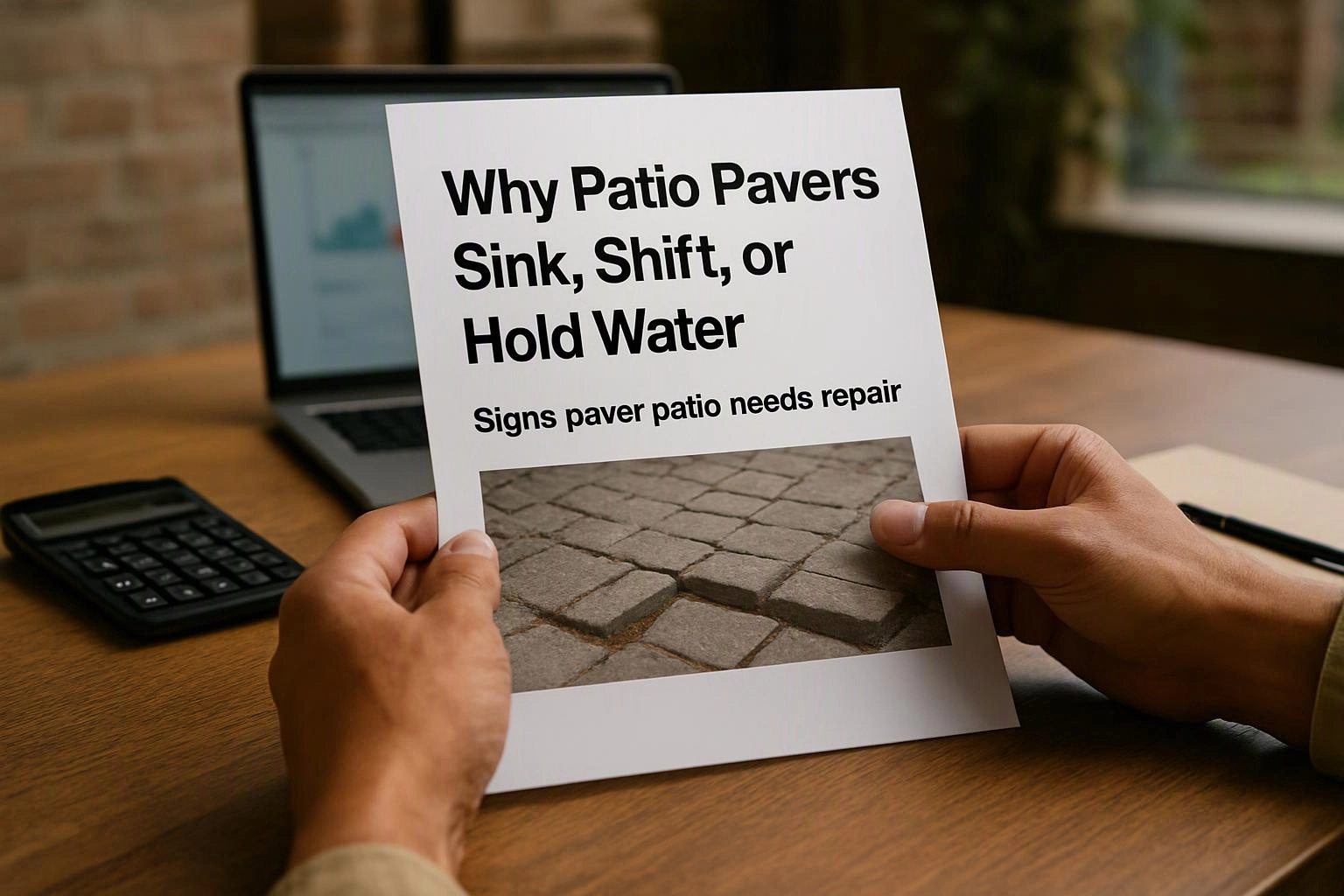
A paver patio needs repair when its surface becomes uneven, moves underfoot, or holds water after rain.
Why Do Patio Pavers Sink or Become Uneven?
Patio pavers sink or become uneven when the supporting base settles, erodes, or lacks proper compaction.
The paver base usually contains compacted aggregate that supports the bedding sand and pavers. Soil settlement can leave a weak area below that base, while erosion can remove support along its edges.
Heavy loads can also expose weak preparation. Drainage matters because water moving through the base can cause washout, soil movement, or a settled base.
Why Do Pavers Shift, Rock, or Develop Gaps?
Pavers shift, rock, or develop gaps when joint support and edge restraint no longer hold the pattern in place.
Joint sand fills the spaces between pavers and helps limit lateral movement. Rain, cleaning, root growth, and washout can remove that support.
An edge restraint keeps the patio border tight. When the restraint fails, shifted pavers and gaps between pavers can spread across the surface. Rocking pavers may also point to a loose bedding layer below.
Why Does Water Pool on a Paver Patio?
Water pools on a paver patio when low spots, blocked drainage, or surrounding runoff keep water from leaving the surface.
The surface slope should guide water toward a suitable outlet. A settled area can interrupt that path and create water pooling after rain.
We also check yard drainage, downspout discharge, soil saturation, and water runoff from nearby areas. A patio can hold water even when the pavers look sound if surrounding drainage sends runoff toward the surface.
The guide Signs Your Yard May Have a Drainage Problem can help you spot wider drainage concerns around the patio.
What Can You Do Yourself, and When Should You Call Us?
You can inspect the surface and clear visible debris, while we handle base correction, pattern resetting, and drainage work.
Small surface concerns may need simple observation, but movement below the pavers requires a closer check. Our paver patio repair process addresses the cause, not only the visible low spot.
| Factor | What you can do yourself | What we do |
|---|---|---|
| Surface inspection | Look for low spots, movement, open joints, and water marks. | We trace visible symptoms to the base, edges, and drainage path. |
| Joint maintenance | Clear leaves and soil from visible joints without disturbing stable pavers. | We replace lost joint sand when joint failure contributes to movement. |
| Paver replacement | Set aside loose pieces if they can be removed safely. | We remove damaged pavers and match the reset area to the existing pattern. |
| Base repair | Avoid adding fill over a sinking area. | We rebuild unstable support and compact the aggregate before resetting pavers. |
| Drainage correction | Observe where water enters and where it remains. | We correct the drainage path and redirect runoff when the patio needs broader work. |
Call us when pavers keep moving, the base is visible, or water returns after cleaning. Those signs usually need more than joint maintenance.
How We Diagnose a Sinking or Water-Holding Patio
Our team diagnoses a sinking or water-holding patio by matching surface symptoms with base, edge, and runoff conditions.
What Repair Does Each Paver Patio Problem Need?
The right repair depends on whether the failure comes from the pavers, the supporting base, the edges, or the drainage path.
We may start with paver removal when the surface is sound but the support below has failed. Our crew can rebuild the base, restore the bedding layer, and complete paver resetting across the affected area.
Open joints may need joint sand replacement. A spreading border may need edge restraint repair, while recurring water pooling may need drainage improvement and redirected runoff.
Our [Paver Patio Installation] service also covers proper base preparation when a larger rebuild makes more sense.
How Do You Decide Between Repair and a New Paver Patio?
Repair suits localized damage, while a new installation may fit widespread base failure or a patio with poor overall drainage.
Localized settlement often allows us to remove and reset only the affected area. This option fits patios with sound pavers and stable sections around the damage.
Widespread settlement can point to broad base failure. Poor drainage across the entire patio may also require drainage redesign before a new surface is installed.
Paver condition matters, too. We consider cracked or worn pavers, repeated movement, and the strength of the existing base before recommending Paver Patio Installation or repair.
For connected outdoor surfaces, our Walkway Installation work can account for the same base and drainage conditions.
Questions About Sinking and Water-Holding Paver Patios
Can one sunken paver be repaired without rebuilding the whole patio?
Yes, one sunken paver can often be repaired without rebuilding the whole patio when the surrounding base remains stable. We remove the affected paver, correct its support, and reset the surface.
What do gaps between patio pavers mean?
Gaps between patio pavers usually mean joint sand has washed out, the edge restraint has failed, or the base has moved. We check those conditions before choosing the repair.
Can standing water damage a paver patio?
Yes, standing water can weaken joint support and contribute to erosion, washout, and further settlement. We trace the water source and correct the low spot or drainage path.
Should pavers be repaired before adding a drainage system?
Yes, pavers should be assessed before adding a drainage system because the surface may already have low spots or base failure. We plan the drainage correction and paver repair together when both problems affect the same area.
Contact us through our contact page to discuss your patio condition.
Related Resources
Paver Patio or Deck: Which Outdoor Space Should You Build?
Compared ToBackyard Renovation: One Landscape Company or Separate Contractors?
Compared ToFrench Drain or Broader Yard Drainage Work: Which Should You Request?
What Goes With ItPlanning an Outdoor Living Space: Patios, Decks, Pergolas, and Kitchens