How Grading and Drainage Fit Into a Landscape Plan
Landscape grading shapes how water moves, while drainage systems collect and redirect water that grading alone can't manage. At LandscaperSammamishwa.com, we coordinate both before hardscaping or planting begins.
Written by Adam Gorski · 29 years of local experience
Request an Estimate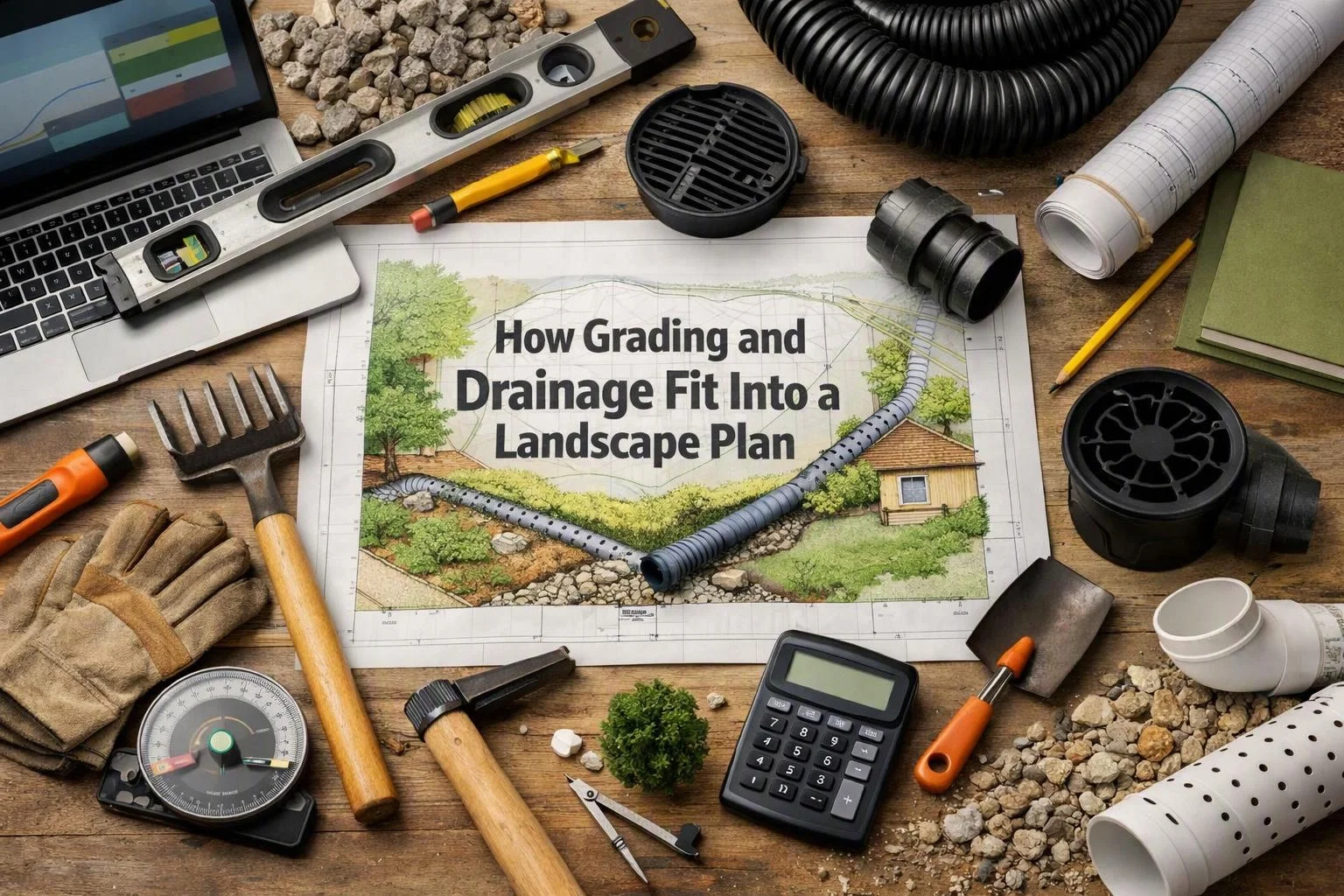
Landscape grading sets the direction for surface runoff across the property. Drainage features then collect or route water when the finish grade can't handle the full flow.
Adam Gorski provides this landscape planning guidance with a focus on clear water movement, practical site preparation, and coordinated installation.
Why Grading and Drainage Belong in the Same Landscape Plan
Landscape grading and drainage design coordinate site water movement, drainage systems, and landscape installation. Grading controls the direction of surface water, while drainage systems manage water that needs collection or underground routing.
Soil affects both parts of the plan. Soil with poor infiltration may hold water in low spots, while a strong slope may send runoff toward a foundation, patio, or planting bed. Our team reviews the landscape plan as one system, so hardscape and planting decisions support proper water management.
When Do You Need Both Grading and Drainage?
You need both services when the ground shape sends water toward problem areas or can't move water away on its own. The right combination depends on where water starts, where it travels, and where it collects.
Our team connects the grade changes with the drainage layout. That approach helps protect soil, hardscape, and planting areas during later installation.
How Grading and Drainage Work Together
Grading establishes the water path first, and drainage features collect or redirect water where the finished grade needs support. Each part affects the placement and depth of the other.
Cost changes with the amount of excavation, the drainage route, and the restoration needed afterward. We plan these parts together to limit rework and protect the finished landscape.
What Comes First: Grading, Drainage, or Planting?
Grading and drainage planning come before planting because soil levels and water paths affect every later landscape element. Our team follows a site-based sequence so each stage supports the next.
Plant installation before this work can leave roots in disturbed soil or place plants in wet areas. Coordinating the sequence helps protect the planting plan and the hardscape.
How We Check a Landscape Plan for Water Problems
We check existing slopes, low areas, runoff sources, and soil conditions before choosing grading or drainage work. Our review focuses on how water behaves during and after rain.
We inspect the property slope and look for low spots that hold standing water. We also trace roof runoff from downspouts and check whether it moves toward the foundation or across planned hardscape.
Soil infiltration helps us judge whether water can soak into the ground. When soil drains slowly, we may plan a drainage pipe, filter fabric, gravel, or another collection method that suits the site.
Our team also checks signs of erosion, shifting soil, and damage near the foundation. These observations help us choose between a grading adjustment, surface routing, or underground drainage.
Which Drainage and Grading Services Can Support the Plan?
The right service depends on whether the main need is changing the land shape, collecting water, routing water, or preparing the site. We match the service to the water problem and the planned landscape use.
| Service or feature | Best fit | Planning role |
|---|---|---|
| Yard drainage | Recurring puddles or saturated soil | Collects and redirects unwanted water |
| French drain installation | Subsurface water that needs a route | Uses a gravel-filled trench and drainage pipe |
| Grading services | Incorrect slope or low areas | Changes the surface water path |
| Excavation services | Drainage trenches or grade changes | Prepares space for buried systems and new soil levels |
| Swale or catch basin | Surface runoff needs collection or direction | Moves or gathers water before it reaches problem areas |
| Landscape consultation | Drainage affects a larger landscape plan | Coordinates water management with planting and hardscape |
Our Yard Drainage planning can connect drainage work with grading, patio preparation, and planting areas. We also review site access because equipment movement can affect excavation and landscape restoration.
What Changes the Cost of Grading and Drainage Work?
Project cost changes with the site shape, soil, access, drainage route, excavation needs, materials, and restoration work. We review those conditions and provide an exact quote for the planned work.
Site access can affect equipment use and the amount of manual work. Soil conditions can also change excavation needs, trench stability, and the material selected for the drainage system.
Existing drainage, the location of the foundation, and the planned hardscape all affect the route. Landscape restoration may include replacing topsoil, repairing lawn areas, or preparing planting beds after installation.
Our quote should clearly identify the planned grading, drainage features, excavation, materials, and restoration scope. You can request a quote through our contact page.
How Can You Tell the Plan Needs a Drainage Review?
A drainage review makes sense when water pools, erodes soil, harms plants, or moves toward structures after rain. These signs show that the current water flow may not match the landscape plan.
Erosion and washed-out soil can reveal a strong runoff path. A muddy lawn or repeated puddling can show that the soil has poor infiltration or that the finish grade has a low spot.
Water near the foundation deserves prompt attention because repeated moisture can affect the surrounding soil. Failing plants may also point to a planting bed that stays too wet or drains too quickly.
We trace the source, direction, and collection point before recommending work. A drainage review can then guide grading adjustments, surface routing, or a buried drainage system.
Questions About Landscape Grading and Drainage
Can poor grading cause standing water in a yard?
Yes, poor grading can cause standing water when the surface directs runoff into a low spot. Drainage may be needed when the ground cannot move that water away on its own.
Does a French drain replace landscape grading?
No, a French drain doesn't replace landscape grading in every plan. Grading controls surface water, while a French drain manages water that needs collection below the surface.
Can drainage problems damage a patio or planting bed?
Yes, drainage problems can wash out soil near a patio or keep a planting bed too wet. A coordinated plan helps direct runoff away from hardscape and plant roots.
What should a landscape drainage plan show?
A landscape drainage plan should show existing and planned grades, runoff direction, collection points, drainage routes, and areas needing restoration. Our team also checks how the plan fits the foundation, patio, lawn, and planting beds.
Tell us where water collects, where it flows, and what landscape work you plan next.
Related Resources
Landscape Architect or Landscape Designer: Which Should You Hire?
Compared ToLandscape Design Plans or a Contractor’s Estimate: What Do You Need?
Compared ToRetaining Wall Repair or Replacement: Which Service Should You Hire?
Compared ToFull-Service Front Yard Landscaping or Separate Contractors?